-Long-Transparent.png?width=200&height=47&name=NEOVAULT-Sheild-Neo-(R)-Long-Transparent.png)
BLOG

Managing workplace substance testing programs with paper forms and spreadsheets exposes US businesses to massive compliance risks. To eliminate administrative bottlenecks, safety managers are transitioning to digital platforms. This guide explores the capabilities of an enterprise-grade drug and alcohol testing dashboard. We will analyze how specialized software streamlines DOT compliance, automates random selection, and integrates chemical results with cognitive impairment tracking. Implementing these advanced tools ensures immediate audit readiness and helps HR teams make objective decisions regarding employee fitness for duty.
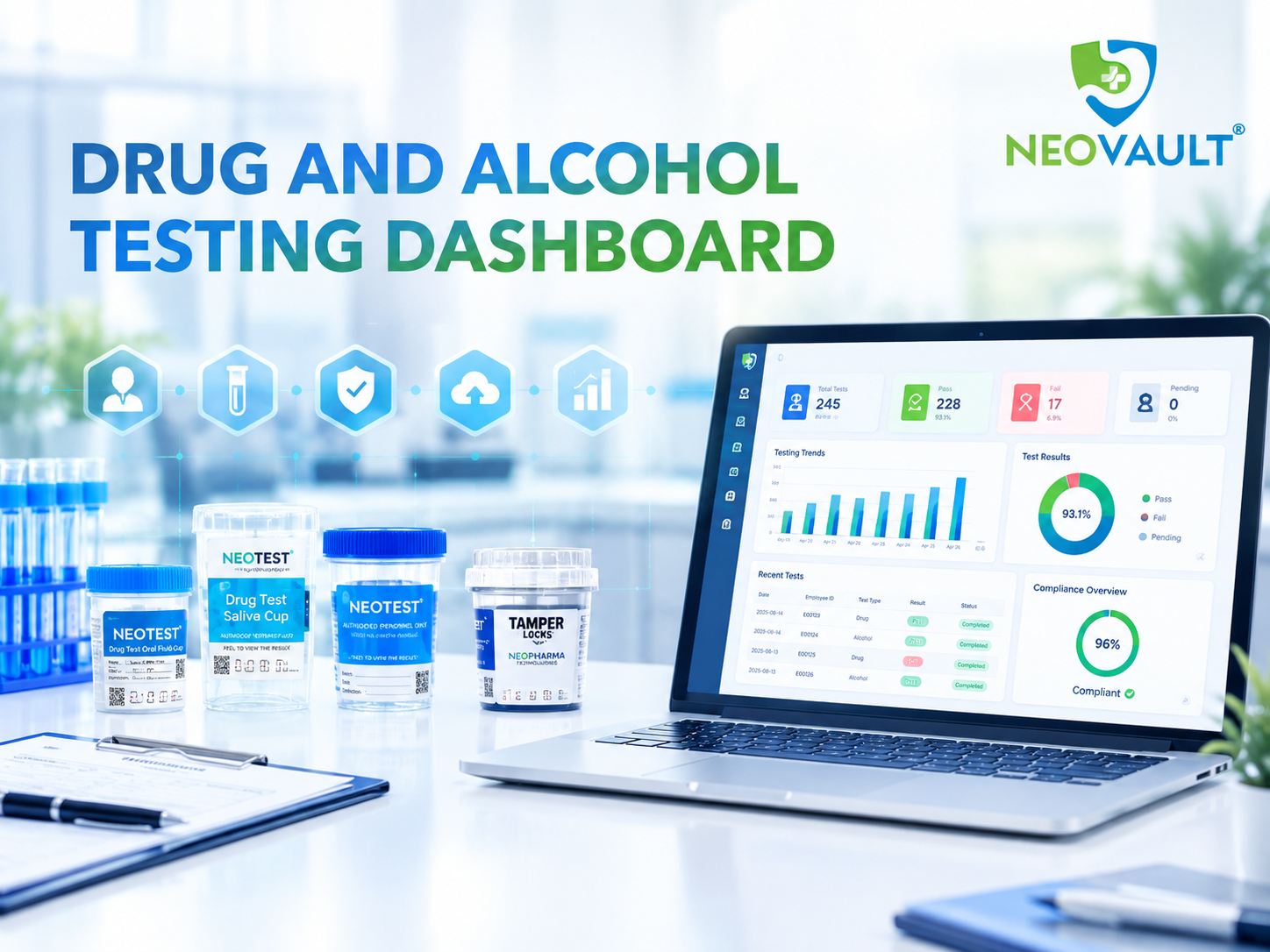
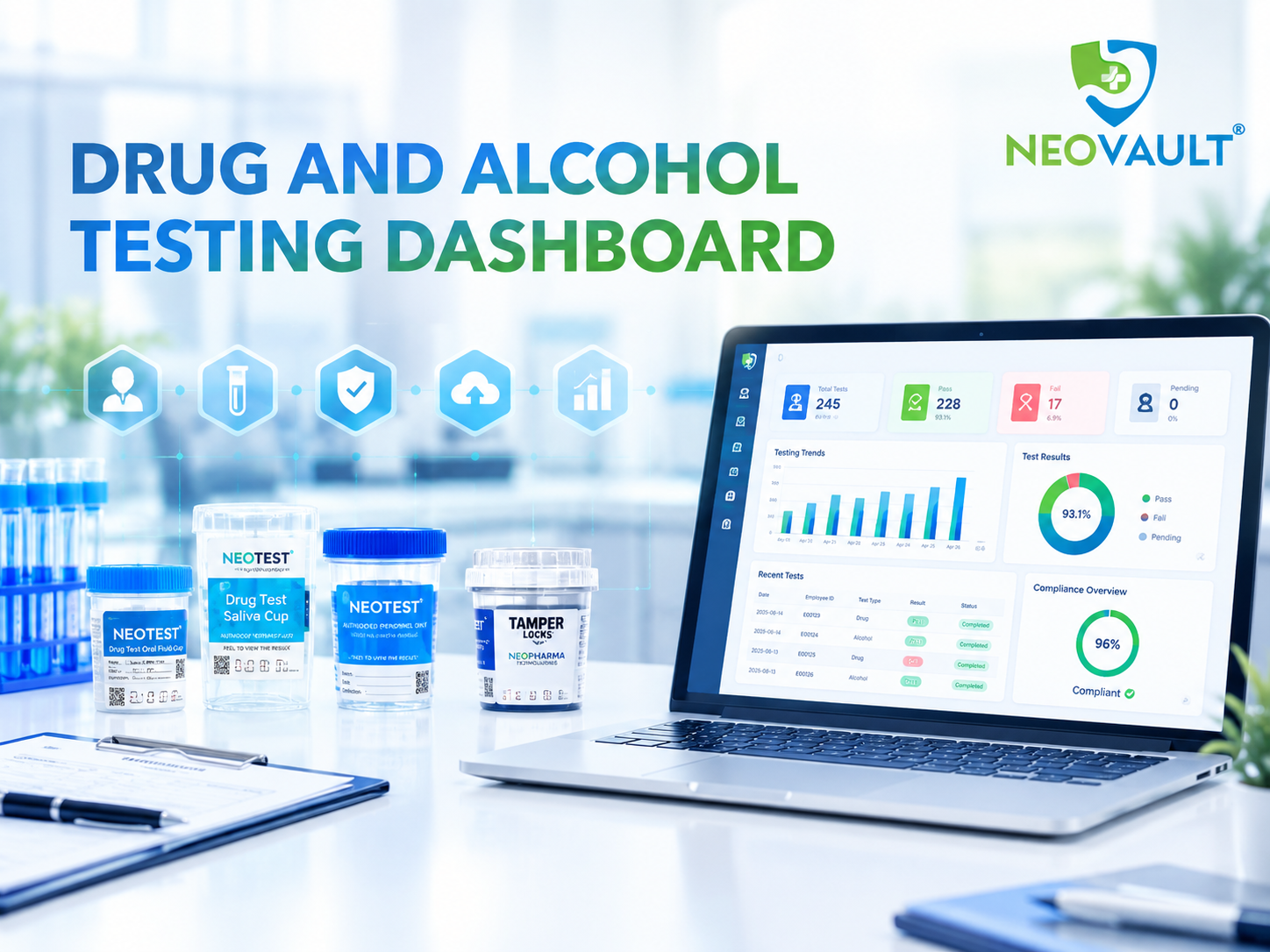 Drug and alcohol testing dashboard interface
Relying on manual processes for workplace drug testing introduces severe operational risks. Without centralized software, employers face increased vulnerability to regulatory fines, DOT audit failures, and significant administrative bottlenecks. These inefficiencies consume valuable human resources time and compromise overall safety.
Federal regulations enforced by the Department of Transportation (DOT) mandate strict adherence to testing protocols and random pool management. When safety teams rely on physical files for employee testing tracking, the risk of human error multiplies. Disorganized records and undocumented selection processes can lead to hefty financial penalties and operational downtime during unannounced federal inspections.
The manual administration of safety programs is a massive drain on company resources. HR managers spend countless hours coordinating with collection sites, tracking down lost paper forms, and manually entering data. This outdated approach slows down daily operations. Instead of focusing on proactive risk mitigation, highly paid professionals are bogged down by repetitive, automatable tasks.
An enterprise-grade drug and alcohol testing dashboard must provide automated workflows and strict compliance features. Essential capabilities include mathematically impartial automated random selection, electronic chain of custody tracking, real-time status updates, and secure data storage to ensure immediate audit readiness.
For US employers subject to DOT regulations, maintaining a scientifically valid random testing program is non-negotiable. Automated random selection software utilizes advanced cryptographic algorithms to select employees impartially. This ensures every worker has an equal statistical chance of being chosen, eliminating supervisor bias and protecting the company from potential discrimination lawsuits.
The transition to electronic chain of custody forms (eCCF) is a transformative step for workplace safety. A modern dashboard provides end-to-end visibility into the entire testing lifecycle. From the moment a test is ordered to the final medical review, every step is logged digitally, eliminating issues associated with illegible handwriting or lost paperwork.
Protecting sensitive employee health data requires enterprise-level security measures that go far beyond standard spreadsheets. Cloud-based dashboards utilize advanced encryption protocols and strict role-based access controls to safeguard health information. When an auditor arrives, safety managers can generate a complete drug and alcohol testing audit trail instantly. This capability transforms a highly stressful preparation process into a simple, five-minute data export.
Forward-thinking employers use software platforms to track cognitive impairment alongside traditional chemical detection. This dual approach is critical because the mere presence of substances like THC does not always equate to current impairment, requiring more sophisticated data correlation to ensure workplace safety.
As cannabis legalization spreads across various states, employers face a complex operational challenge. Traditional testing methods only detect the presence of chemical metabolites, which remain in the body long after intoxicating effects wear off. This creates a critical distinction between cannabis impairment vs THC detection. Knowing an employee consumed cannabis over the weekend does not answer if they are safe to operate heavy machinery today.
To bridge the critical safety gap, employers must understand the difference between impairing and non-impairing substances. For example, clinical research on cannabidiol (CBD) demonstrates that pure CBD does not cause cognitive or psychomotor impairment, unlike THC. Advanced digital platforms help employers make objective, fit-for-work decisions by measuring reaction time and memory recall to assess actual current capability, rather than relying on flawed assumptions about legal CBD use.
The NEOVAULT IRM platform centralizes strict DOT compliance and cognitive impairment tracking within a single interface. This unified approach eliminates data silos, automates administrative tasks, and provides HR managers with real-time visibility into organizational safety metrics to mitigate operational risks proactively.
The myNEO platform is specifically designed to consolidate fragmented safety programs into one intuitive interface. Rather than forcing HR staff to log into multiple laboratory portals and internal spreadsheets, safety managers gain a bird's-eye view of their compliance landscape. This level of centralization is crucial for large organizations operating across multiple states with varying local regulations, allowing them to monitor real-time safety metrics effortlessly.
|
Feature Comparison |
Manual Management |
NEOVAULT Dashboard |
|
Random selection |
Prone to human bias and spreadsheet errors |
Mathematically impartial and fully automated |
|
Audit preparation |
Requires days of gathering paper files |
Instant generation of secure audit trails |
|
Risk assessment |
Relies purely on historical pass/fail data |
Integrates real-time cognitive impairment scores |
|
Data security |
Vulnerable physical files and emails |
Cloud-based encryption with role-based access |
NEOVAULT's unique software architecture allows employers to deploy digital cognitive assessments before an employee begins a safety-sensitive shift. If the assessment flags a potential impairment, the system automatically triggers a defined workflow for further evaluation or immediate chemical testing. This proactive capability transforms the digital platform from a simple, reactive record-keeping tool into an active, predictive risk prevention system that protects the entire workforce.
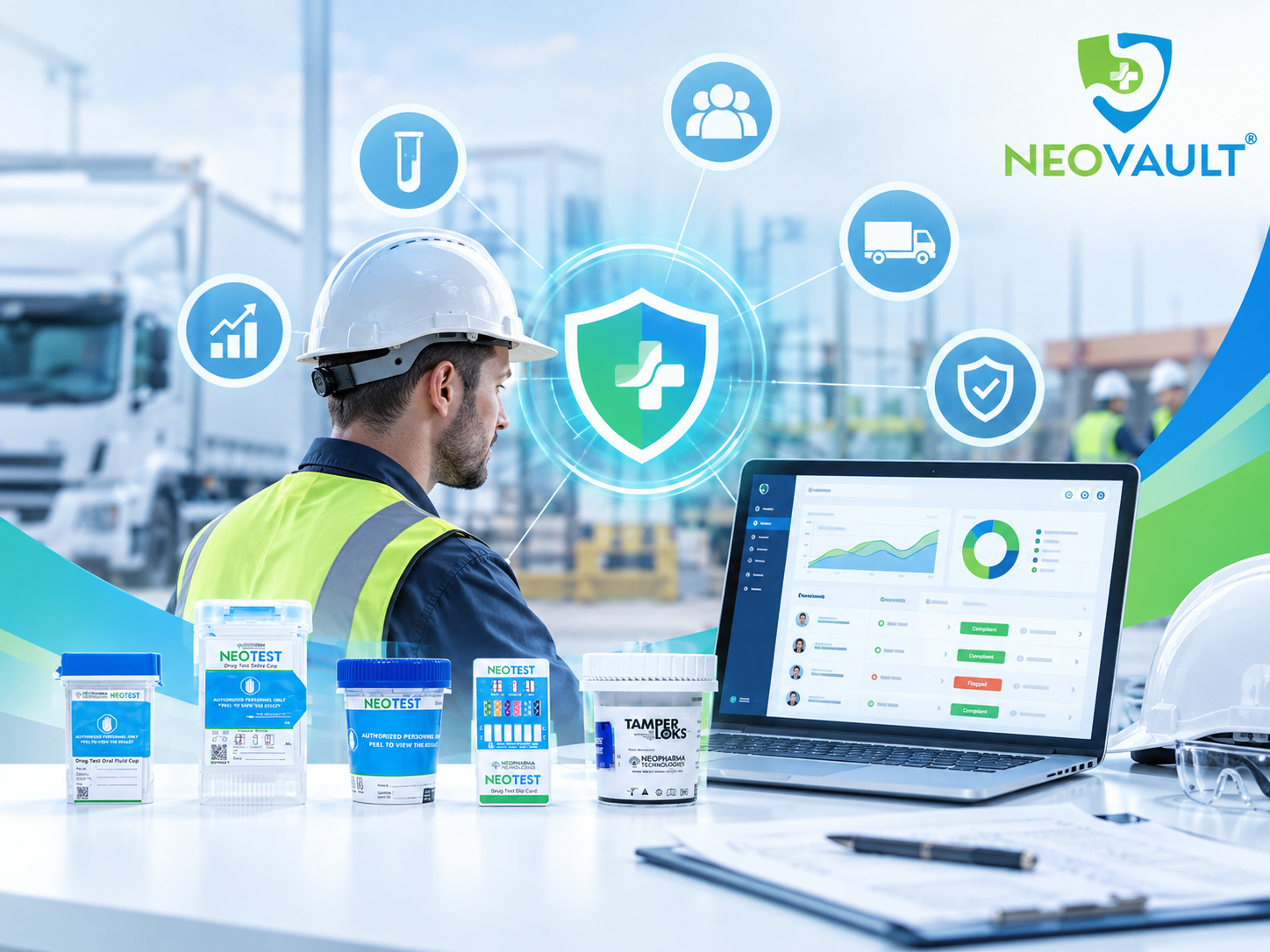
NEOVAULT software for complex workplace safety management
An automated dashboard utilizes scientifically valid algorithms to select employees for random testing impartially. It automatically updates active testing pools, tracks overall completion rates, and generates timestamped, verifiable reports. This continuous digital tracking ensures full compliance with stringent DOT regulatory requirements during unannounced audits.
Yes, modern drug testing software features robust APIs that allow seamless integration with existing HRIS and payroll systems. This connectivity eliminates duplicate data entry, ensures employee rosters are always accurate for random selection pools, and significantly accelerates the overall hiring and onboarding process for new employees.
An audit-ready dashboard centralizes all necessary compliance documentation, including electronic chain of custody records, MRO verified results, and random selection logs. It provides secure, instant access to historical data, allowing employers to produce comprehensive reports immediately upon an inspector's request without manually searching through paper files.
Transitioning from outdated paper processes to a centralized drug and alcohol testing dashboard is no longer optional for organizations serious about risk mitigation. By automating workflows, ensuring rigorous DOT compliance, and integrating cognitive impairment data, employers can build a safer workplace. This digital shift protects your workforce while reducing administrative burdens on HR teams. Contact Neopharma Technologies today to discover how NEOVAULT can digitize your processes and optimize your overall safety compliance program effectively.