-Long-Transparent.png?width=200&height=47&name=NEOVAULT-Sheild-Neo-(R)-Long-Transparent.png)
BLOG

Pre employment drug screening in the US operates under a layered legal framework that HR and Safety Managers cannot apply uniformly across all roles and states. DOT mandates govern safety-sensitive transport positions strictly, while state laws control timing, written consent, and increasingly, whether a positive THC result can lawfully disqualify an applicant. This guide covers testing method selection, DOT protocols, state law complexity, medical CBD disclosures, and ADA and FCRA compliance obligations.
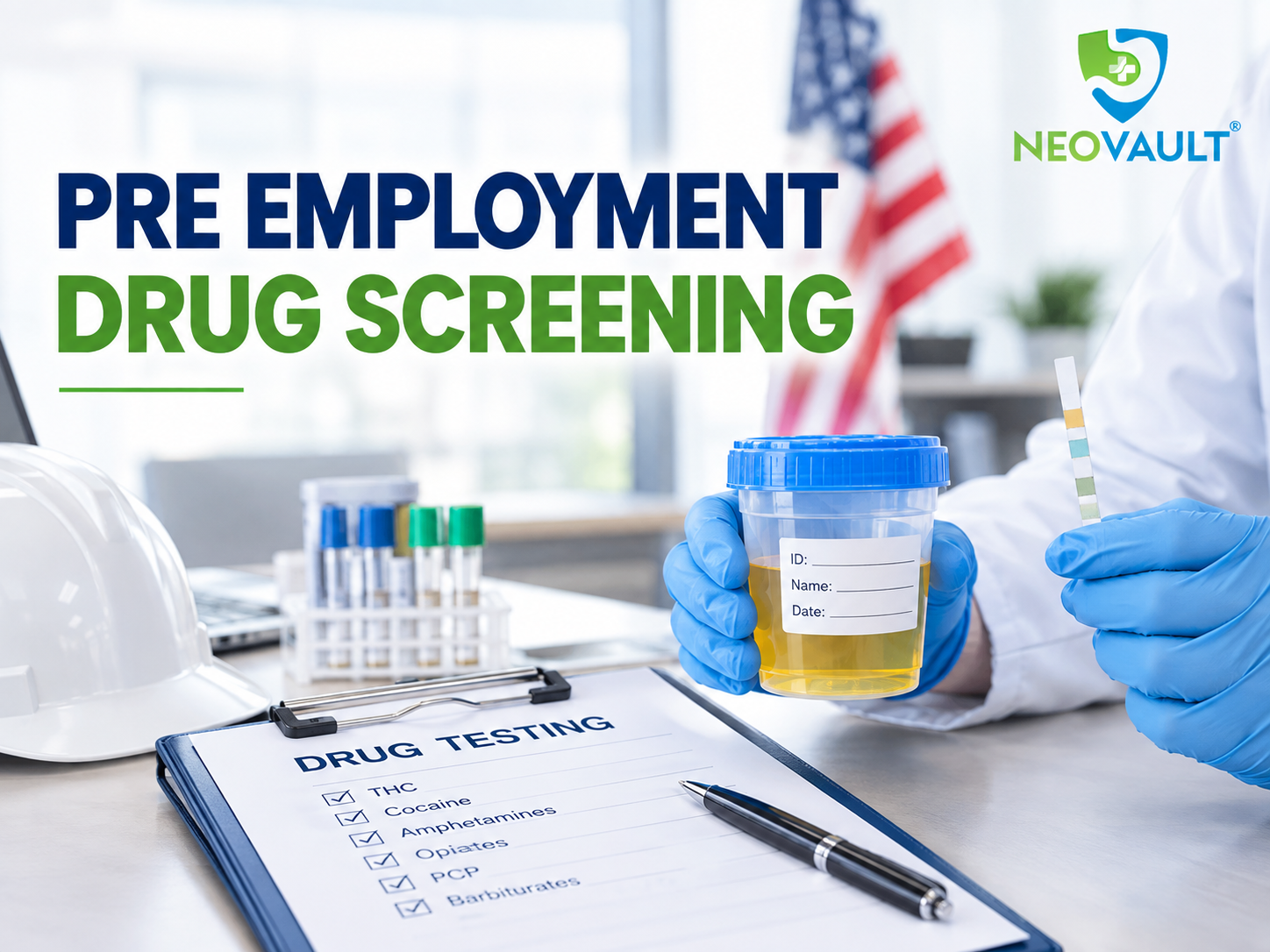
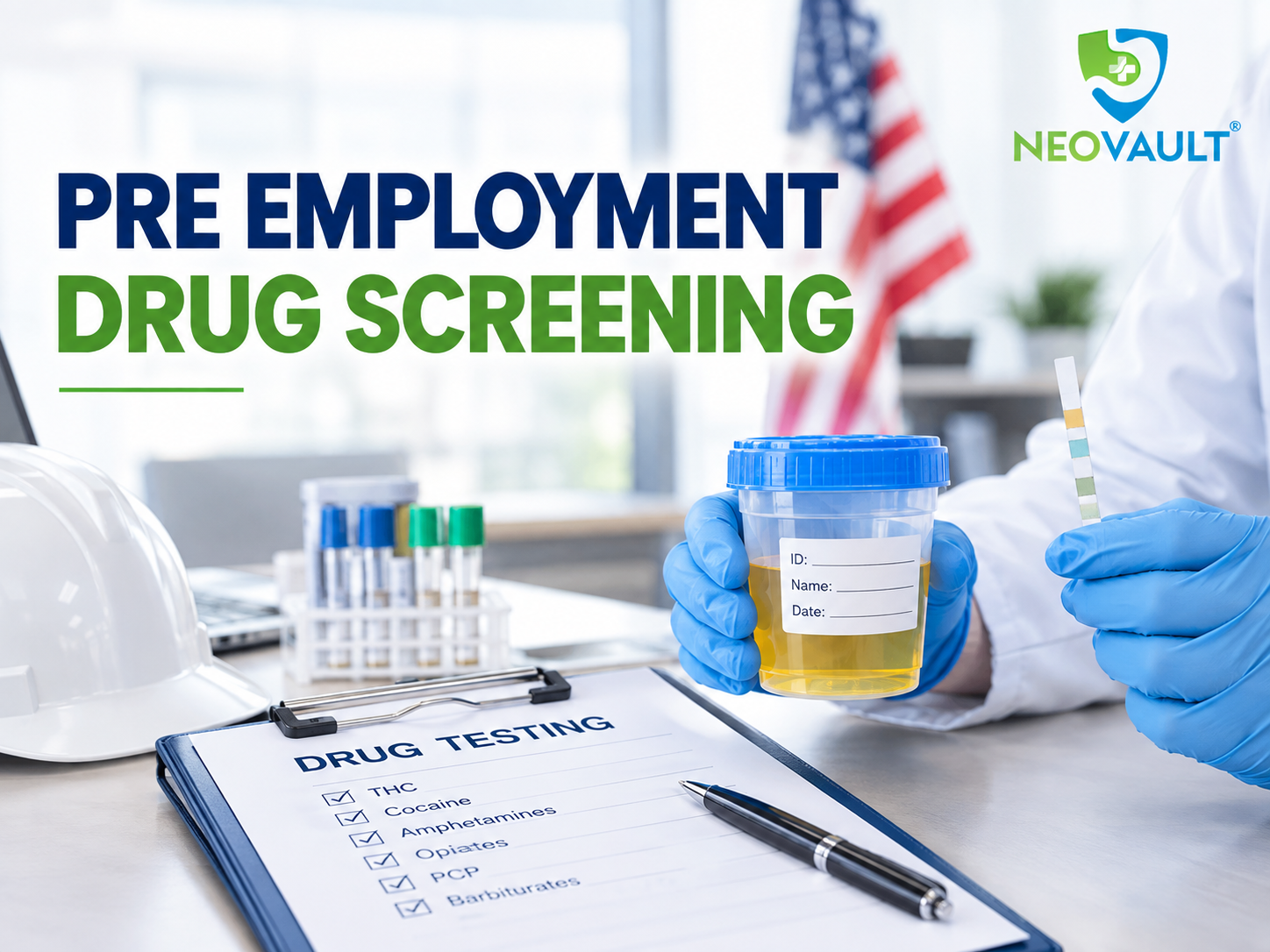
Pre-employment drug screening process for US employers 2026
US employers typically start with a standard 5-panel drug test for pre-employment screening, targeting THC, cocaine, opiates, PCP, and amphetamines. The choice of collection method - urine or the newly DOT-authorized oral fluid - depends on the role's safety profile and applicable federal requirements.
The panel size must reflect the actual safety risk of the position. A 5-panel test meets the federal SAMHSA baseline and satisfies DOT requirements for most transport roles. A 10-panel test adds benzodiazepines, barbiturates, methadone, propoxyphene, and methaqualone, and is appropriate where sedative misuse carries direct operational risk.
While the DOT formally authorized oral fluid testing in 2023, the practical implementation has faced significant delays. In May 2026, the DOT issued a new final rule clarifying procedures because the industry is still waiting for a sufficient number of HHS-certified oral fluid laboratories to become operational. The current operational reality is:
Federal law mandates pre employment drug screening exclusively for safety-sensitive roles in DOT-regulated industries, while non-regulated private employers and federal contractors under the Drug-Free Workplace Act have broader discretion over their testing policies and documentation. However, for those DOT-regulated transport employers, the protocol is strictly non-negotiable, and the following specific requirements under 49 CFR Part 40 cannot be modified by any internal company policy:
For a full breakdown of ongoing DOT testing obligations beyond pre-employment, see the DOT drug testing requirements guide.
State laws determine when a test can occur, what consent documentation is required, and whether THC results can lawfully be used to reject an applicant. Employers operating across multiple states cannot apply a single uniform policy without legal risk.
Several states - including California, Minnesota, and New Jersey - require employers to extend a conditional job offer before requesting a drug test. Testing before assessing qualifications risks exposing protected medical information prior to any employment decision, creating grounds for disability discrimination claims. The compliant sequence in these states is:
Most states require employers to provide written notice before a drug test. A generic consent buried in an onboarding packet does not satisfy these requirements. The documentation must typically include:
As of 2026, approximately 15 to 20 states severely restrict employers from rejecting applicants solely based on a positive off-duty THC result. Even with the ongoing federal discussions around rescheduling marijuana to Schedule III, the divide between federal transport mandates and state-level protections remains sharp:
|
Role Type |
State THC Protections Apply? |
DOT Rules Apply? |
|
CDL truck driver (FMCSA-regulated) |
No - DOT federal law overrides state protections |
Yes - THC disqualifies from safety-sensitive duties |
|
Office-based or non-safety-sensitive staff |
Depends on state - many prohibit adverse action |
No |
|
Construction site supervisor (no DOT nexus) |
Depends on state - safety roles often exempt |
No - company policy governs |
For a state-by-state breakdown of testing rights and cannabis protections, see this overview of workplace drug testing laws in the US.
Legal CBD products can contain enough trace THC to trigger a positive test result in applicants who have never used recreational cannabis. Without a structured disclosure process, standard screening protocols have no mechanism to distinguish between therapeutic CBD use and deliberate THC consumption.
Under the 2018 Farm Bill, hemp-derived CBD is federally legal at or below 0.3% THC by dry weight. That limit sounds negligible, but THC is highly lipophilic - it accumulates in fat tissue and releases slowly over time. A person using high-dose CBD oil (50-150mg/day, common for therapeutic purposes) may ingest enough residual THC that urine or oral fluid concentrations exceed the SAMHSA 50 ng/mL cutoff threshold after days or weeks of regular use. The applicant is not impaired. The test cannot tell the difference. And if the employer has no disclosure process in place, the legal risk of a wrongful rejection sits entirely with the company.
Before testing occurs, employers should provide applicants with a Pre-employment Medical Declaration - a structured form allowing voluntary disclosure of current legal substance use, including CBD products and lawfully prescribed medications. This document serves two functions: it gives the MRO the clinical context needed to assess borderline positive results, and it documents that the employer acted in good faith before making a hiring decision.
A 2024 peer-reviewed study published in the Journal of Analytical Toxicology, CBD-THC oral fluid pharmacokinetics study (JAT, 2024), confirms measurable THC concentrations appear in oral fluid following repeated CBD administration - even within legal product formulations. This research provides the evidentiary basis HR teams need when advising leadership on why a declaration process is operationally necessary, not a procedural nicety.
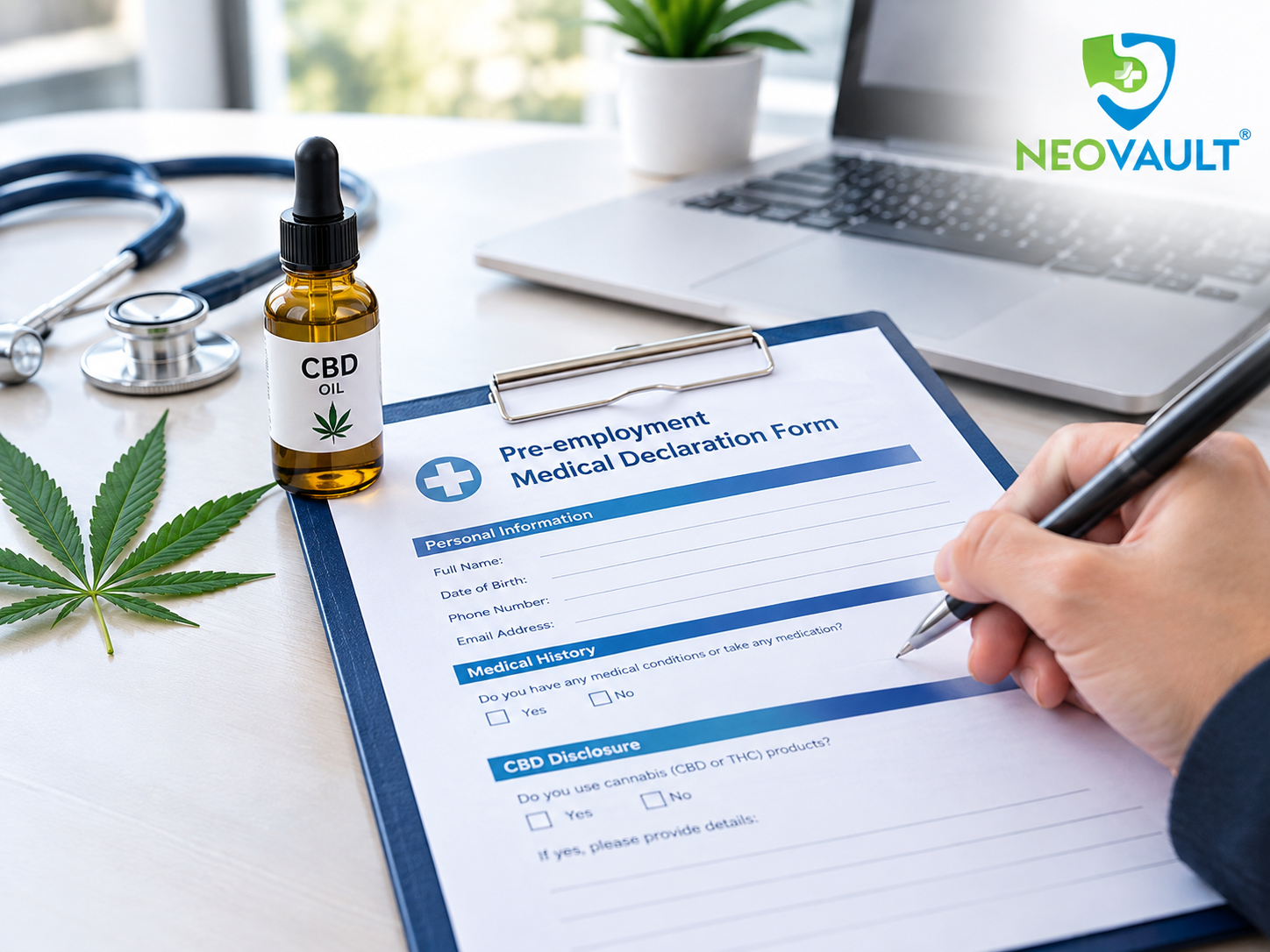 Pre-employment Medical Declaration form for CBD disclosure
A legally defensible pre-employment drug screening program must operate within federal civil rights boundaries. Two statutes create specific procedural obligations that expose employers to litigation if ignored - regardless of how correctly the test itself was administered.
When an applicant's result is positive due to a lawfully prescribed medication - opioid pain management, ADHD stimulants, benzodiazepines - the employer cannot withdraw the conditional offer without first engaging the ADA interactive process:
When a third-party background screening agency administers or reports drug test results, the Fair Credit Reporting Act imposes a mandatory two-step process before an offer can be withdrawn:
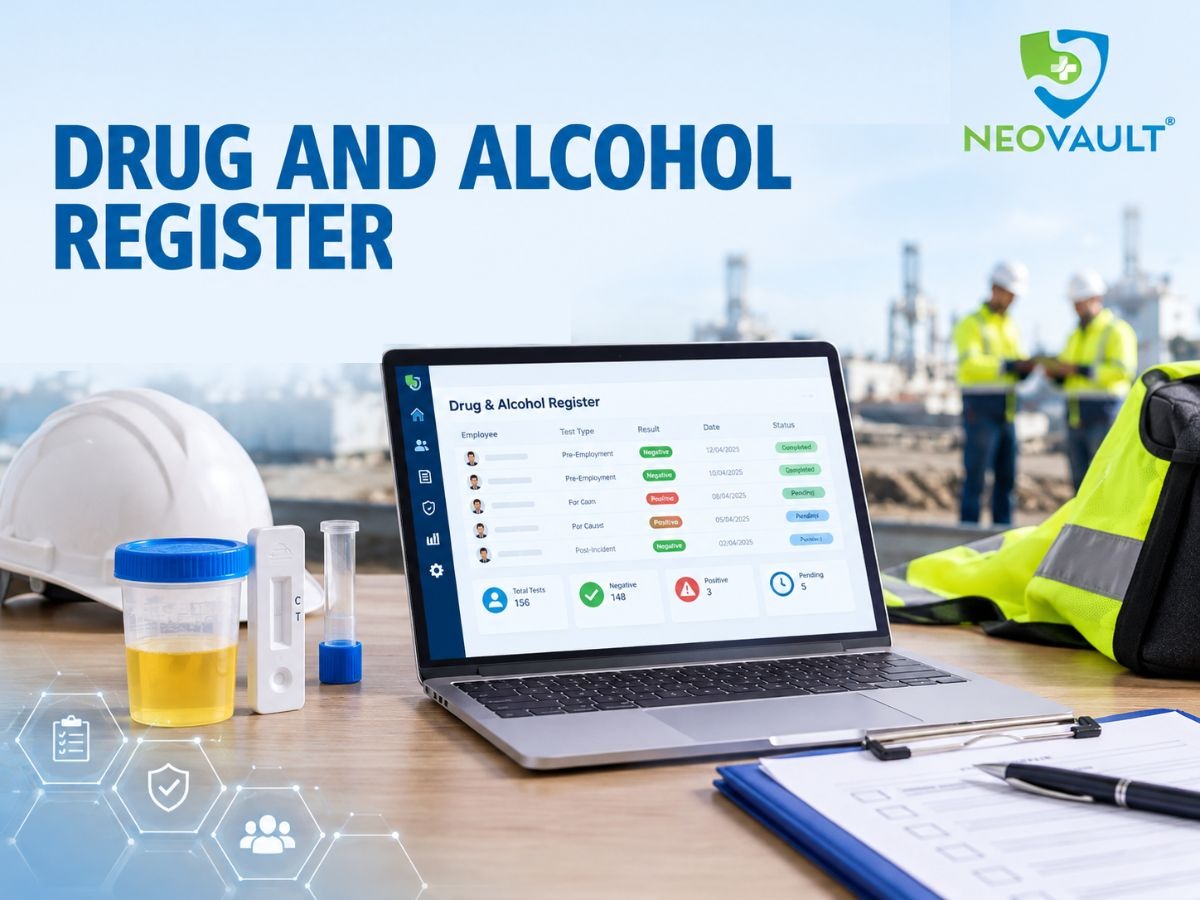
Managing DOT record retention, state-specific consent forms, MRO result routing, and FCRA adverse action documentation through paper-based systems creates avoidable gaps in the compliance chain. NEOVAULT's Drug and Alcohol Testing Module digitizes the full pre-employment drug screening workflow, providing features specifically designed to eliminate these legal risks:
Yes - provided the test followed a conditional offer, the positive result is for a substance not protected under applicable state law, and the policy was applied consistently across all applicants for that role. If the result is linked to a prescription medication, the ADA interactive process must be completed before any final decision is made.
Yes. For safety-sensitive roles regulated by the DOT - commercial truck drivers, airline pilots, transit operators - federal law prohibits THC use regardless of state legalization. State protections for recreational or medical cannabis do not apply to DOT-covered positions. A confirmed positive for THC disqualifies the applicant from safety-sensitive duties.
Under 49 CFR Part 382, DOT-regulated employers must retain negative pre-employment test results for a minimum of one year, and positive results with related documentation for a minimum of five years. Records must be stored securely and made available to the DOT upon request during compliance reviews.
Successfully managing pre employment drug screening in 2026 requires more than just sending a candidate to a lab. As outlined in this guide, HR and Safety Managers must navigate a complex web of DOT mandates, state-specific privacy laws, and anti-discrimination regulations like the ADA and FCRA. By implementing clear policies, utilizing medical declarations for CBD, and adopting platforms like NEOVAULT to digitize the chain of custody, your organization can conduct effective pre-employment testing that protects both workplace safety and applicant rights.