-Long-Transparent.png?width=200&height=47&name=NEOVAULT-Sheild-Neo-(R)-Long-Transparent.png)
BLOG

For HR and Safety Managers, implementing a workplace impairment program requires more than purchasing test kits. Personnel conducting the tests must complete a recognised drug and alcohol testing course to ensure strict adherence to Australian standards. This guide covers the core training components, the legal framework surrounding specimen collection, and how digitising the process with a secure platform streamlines compliance. By combining qualified collectors with digital chain of custody software, organisations can protect their workforce and reduce legal liabilities efficiently.
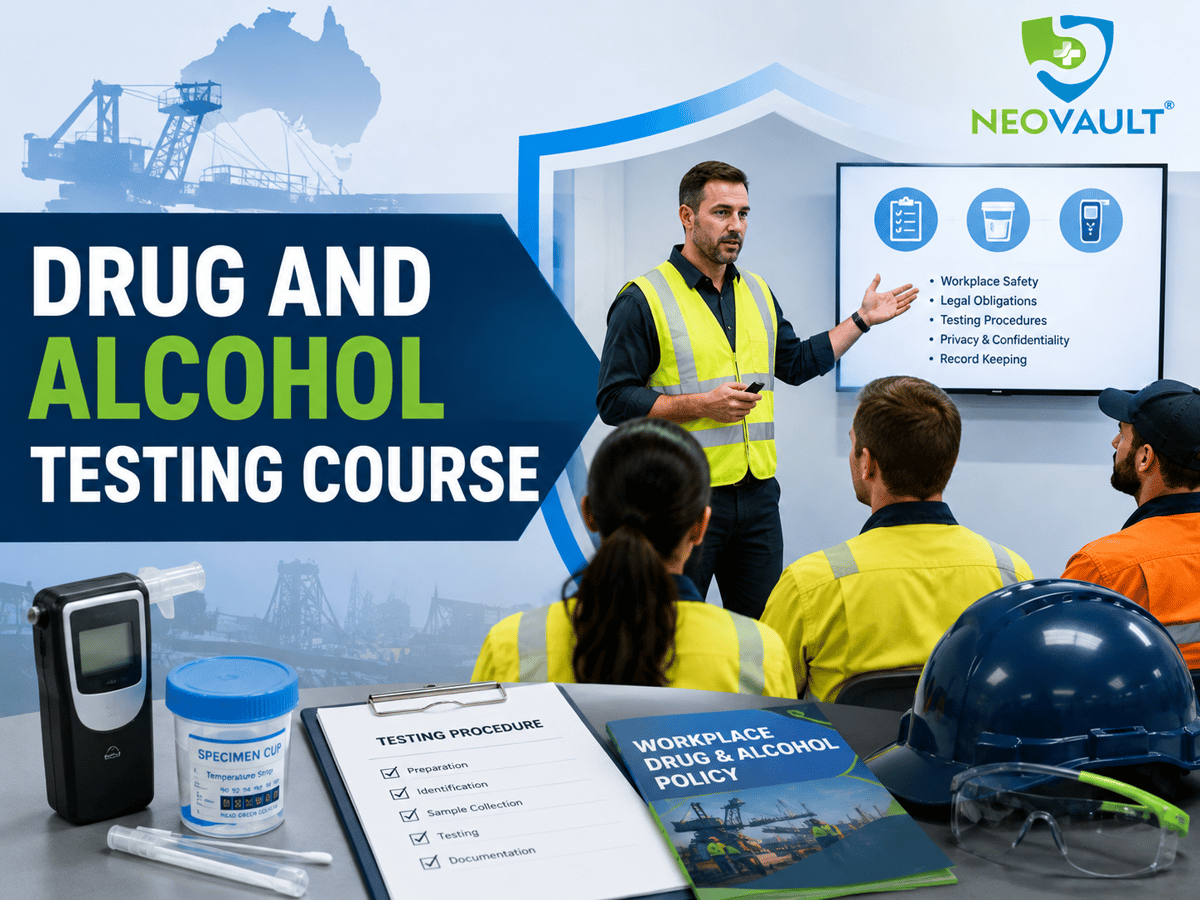
Drug and Alcohol Testing Course Australia
A drug and alcohol testing course in Australia trains individuals to safely and accurately collect urine, oral fluid, and breath samples in the workplace. It ensures collectors understand chain of custody protocols and comply with national standards for specimen collection.
The primary unit, HLTPAT010, provides comprehensive training on how to handle biological specimens safely. When an employee takes a drug testing training program, they are equipped to handle complex scenarios efficiently. The curriculum ensures collectors achieve competency in several key areas:
A crucial part of the curriculum is mastering the chain of custody. This process meticulously tracks a sample from the moment it is collected from the donor until the final laboratory result is securely recorded.
While traditional methods rely heavily on physical paper forms, the industry is rapidly shifting towards a digital chain of custody. Modern workflows use software to log every single step electronically, providing auditors with a verifiable and tamper-proof trail that holds up under legal scrutiny.
Employing certified testers is critical because it ensures legally defensible results and adherence to WHS regulations. Trained personnel can confidently navigate complex scenarios, handle sensitive data, and accurately interpret non-negative results, minimising legal liabilities and operational risks for the business.
Workplace testing in Australia is governed by strict regulatory frameworks. A certified tester knows how to accurately apply these rules, ensuring that the testing protocol aligns with Safe Work Australia guidelines. Every drug and alcohol testing course strongly emphasises the importance of these frameworks, which mandate:
Having a workplace drug testing certification Australia ensures your staff fully understand and implement these nuanced requirements correctly.
Handling non-negative results requires a deep understanding of external variables and medical nuances. For instance, a study published in the Journal of Analytical Toxicology highlights the complex pharmacokinetic profile of legal oral cannabidiol (CBD).
Certified testers are trained to effectively handle these intricate biological scenarios by understanding that:
By using a secure digital platform, collectors can properly log employee declarations regarding legal supplements. This ensures that the data is accurately recorded before the sample is sent for laboratory confirmation, protecting the worker from unfair disciplinary action.
Completing a drug and alcohol testing course provides critical theoretical knowledge, but daily operations demand more. The NEOVAULT platform is a secure, enterprise-ready SaaS solution that digitises the entire on-site workflow, supporting certified collectors and reducing the administrative burden on HR and Safety Managers.
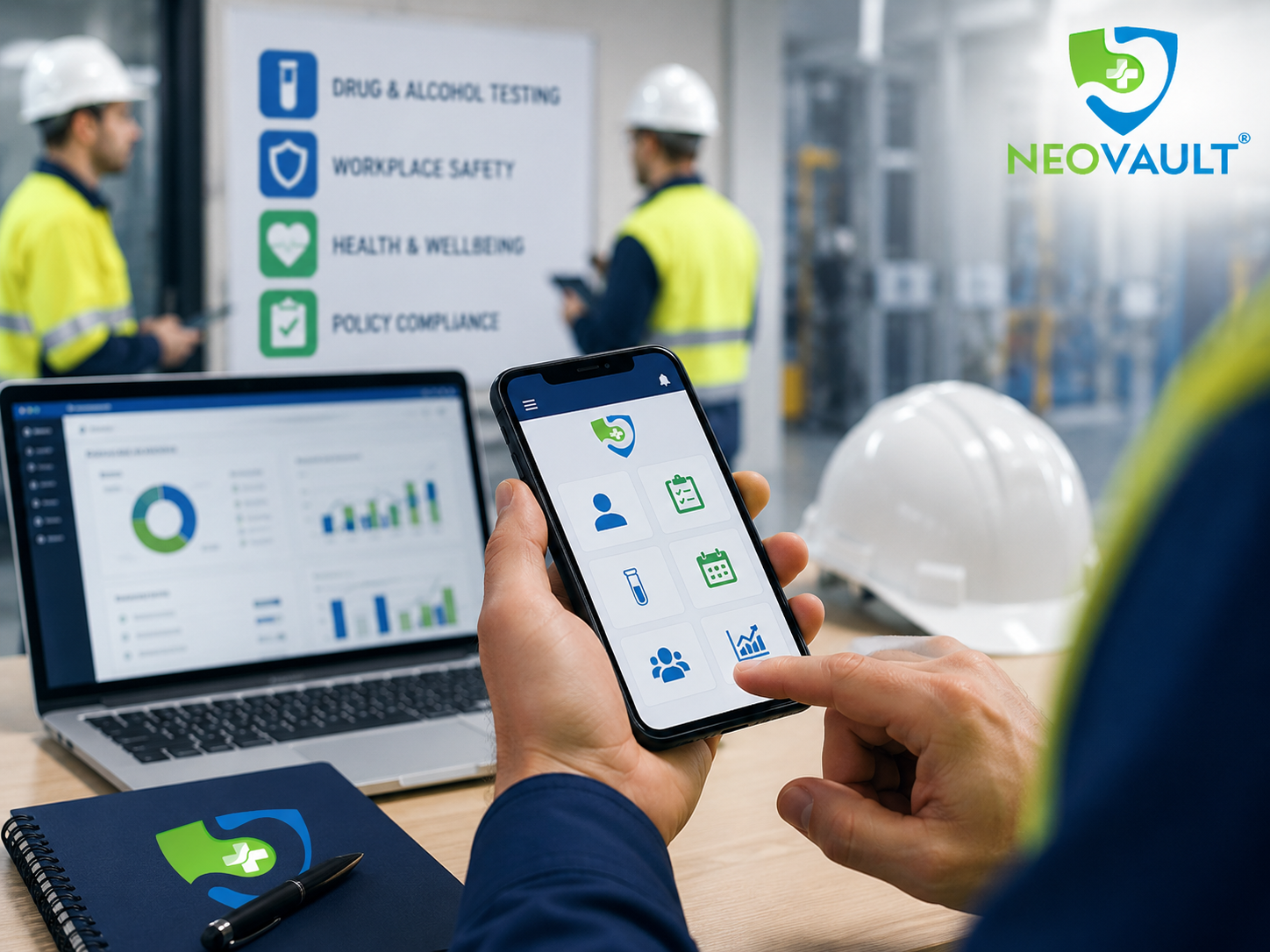
The biggest operational risk after completing collector training is a broken chain of custody on-site. Using the myNEO Mobile App, collectors scan the physical test kit's unique QR code to instantly assign a verified digital identity to every sample. The app supports offline functionality, making it particularly effective for remote operations in mining, construction, or transport logistics. Consent forms and digital signatures are captured directly on a device, eliminating paper forms that are easily lost or misfiled.
A urine or oral fluid specimen only reveals historical substance use, not whether a worker is actively impaired at the time of their shift. The NEOVAULT IRM module addresses this gap by integrating 1-minute cognitive assessments into the pre-shift workflow, allowing personnel to evaluate real-time workforce readiness alongside standard AS/NZS specimen collection.
When a non-negative result occurs, the defensibility of the entire process depends on the quality of the records. All test outcomes sync automatically to a centralised cloud dashboard, providing managers with real-time visibility across multiple sites. Every step, from the initial QR scan to the secondary laboratory confirmation, is stored as a time-stamped audit trail that holds up under Fair Work Commission scrutiny.
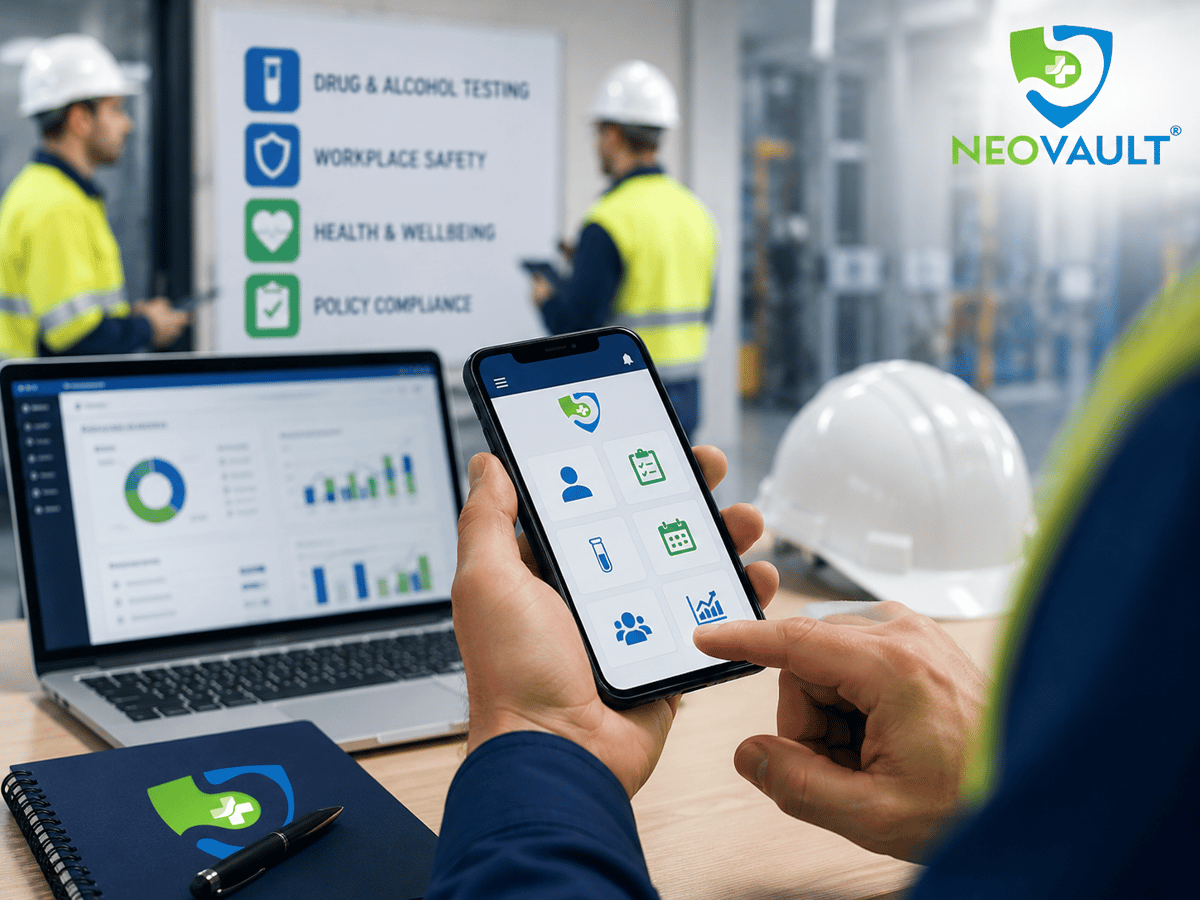 myNEO Mobile App used for testing program compliance
Related reading: WHS drug and alcohol testing requirements
Yes, to perform legally defensible workplace testing, collectors must complete a drug and alcohol testing course. This qualification ensures that the individual fully understands and complies with the relevant Australian standards for specimen collection, maintaining the physical integrity of every sample collected.
Yes, the comprehensive course covers the strict collection, handling, and documentation procedures required for both urine and oral fluid testing. Additionally, it trains personnel in accurate breath alcohol testing and equipment calibration, ensuring complete workplace compliance across all testing methods.
Software helps certified testers by providing a digital workflow that entirely eliminates manual paperwork. It automates the complex chain of custody, ensures sensitive data is securely logged in real-time, and significantly reduces the administrative burden of maintaining audit-ready compliance records.
Any personnel designated to collect urine, oral fluid, or breath samples must hold a recognised qualification, typically the HLTPAT010 unit of competency. This applies to internal safety staff, HR personnel, and contracted collection agencies across all high-risk sectors.
Using an uncertified collector compromises the chain of custody, rendering test results legally indefensible. A single procedural breach can invalidate results entirely, exposing the organisation to unfair dismissal claims before the Fair Work Commission.
In summary, maintaining a compliant workplace requires more than just purchasing testing equipment; it demands certified personnel who understand the legal nuances of specimen collection and data management. Enrolling your staff in a recognised drug and alcohol testing course is the most effective way to ensure strict adherence to national standards and significantly mitigate operational risks. When you combine this certified expertise with a powerful digital chain of custody, you create an unassailable compliance framework that protects both your business and your employees.