-Long-Transparent.png?width=200&height=47&name=NEOVAULT-Sheild-Neo-(R)-Long-Transparent.png)
BLOG

For Safety and HR Managers, maintaining a secure work environment is a top priority. A critical component of this is understanding and implementing effective workplace drug testing NZ protocols. This comprehensive guide explores the nz drug testing standard as/nzs 4308 in detail. We will break down the essential requirements, outline significant changes introduced in the recent 2023 update, and discuss complex challenges employers face. Read on to discover how to optimize your testing programme and streamline compliance management effectively.
NZ Drug Testing Standard AS/NZS 4308 Guide
The AS/NZS 4308 is a joint Australian and New Zealand protocol governing the collection, detection, and quantification of drugs of abuse in urine. It provides a stringent framework to help ensure workplace testing processes are accurate, reliable, and legally defensible for employers and collection agencies.
Achieving compliance requires following strict chain of custody AS/NZS 4308 protocols, utilising certified collectors, and ensuring laboratory confirmation for specific drug classes. These essential layers prevent sample tampering and guarantee result integrity. Furthermore, they form the foundation of a legally robust workplace safety policy, assuring employees that their samples are handled with the utmost professional care and confidentiality from start to finish.
The collection process is often the most vulnerable stage of a drug test. To prevent employees from adulterating or diluting their urine samples, the standard mandates strict collection procedures. Collectors must control the testing environment by securing water sources and requiring the donor to leave outerwear outside. Furthermore, they must verify identity using photographic ID and conduct temperature checks on the sample immediately.
A flawless chain of custody AS/NZS 4308 is non-negotiable. This refers to the chronological paper trail recording the sequence of custody, transfer, and analysis of the specimen. From the moment the sample is collected and sealed with a tamper-evident barcode to the time it is tested in the laboratory, every individual handling the sample must sign and record their interaction. Any break renders results invalid.
Under the standard, routine urine screening typically focuses on identifying five major drug classes associated with workplace impairment. These substances pose severe risks when operating heavy machinery or vehicles:
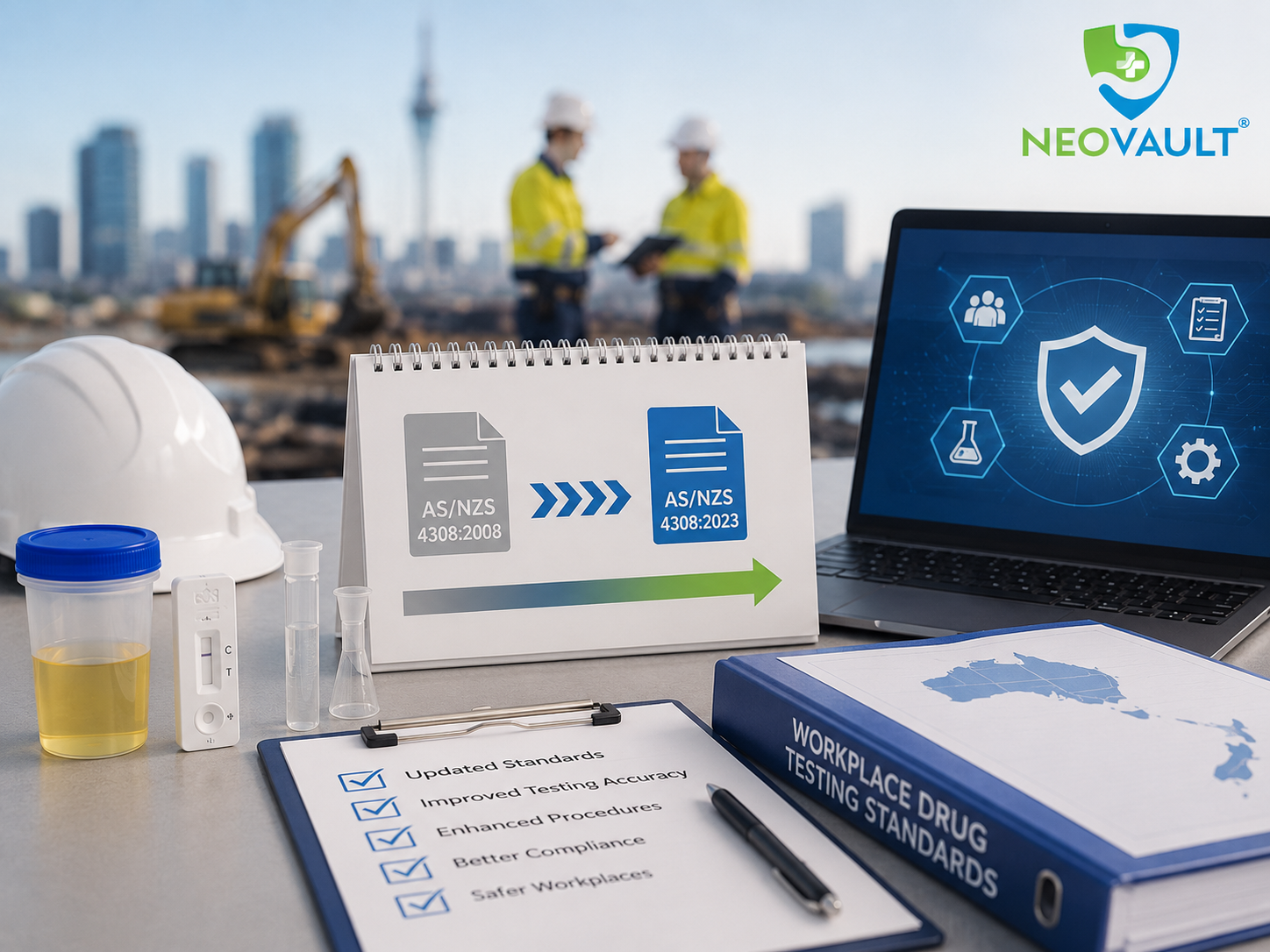
The AS/NZS 4308:2023 update introduces critical changes, including modified urine drug test cut off levels and a notable terminology shift from "non-negative" to "not-negative". This revision aligns the protocol with modern scientific advancements and advanced pharmacological data. By updating these parameters, the standard ensures testing capabilities remain accurate, fair, and legally sound for contemporary workplace environments dealing with new synthetic substances.
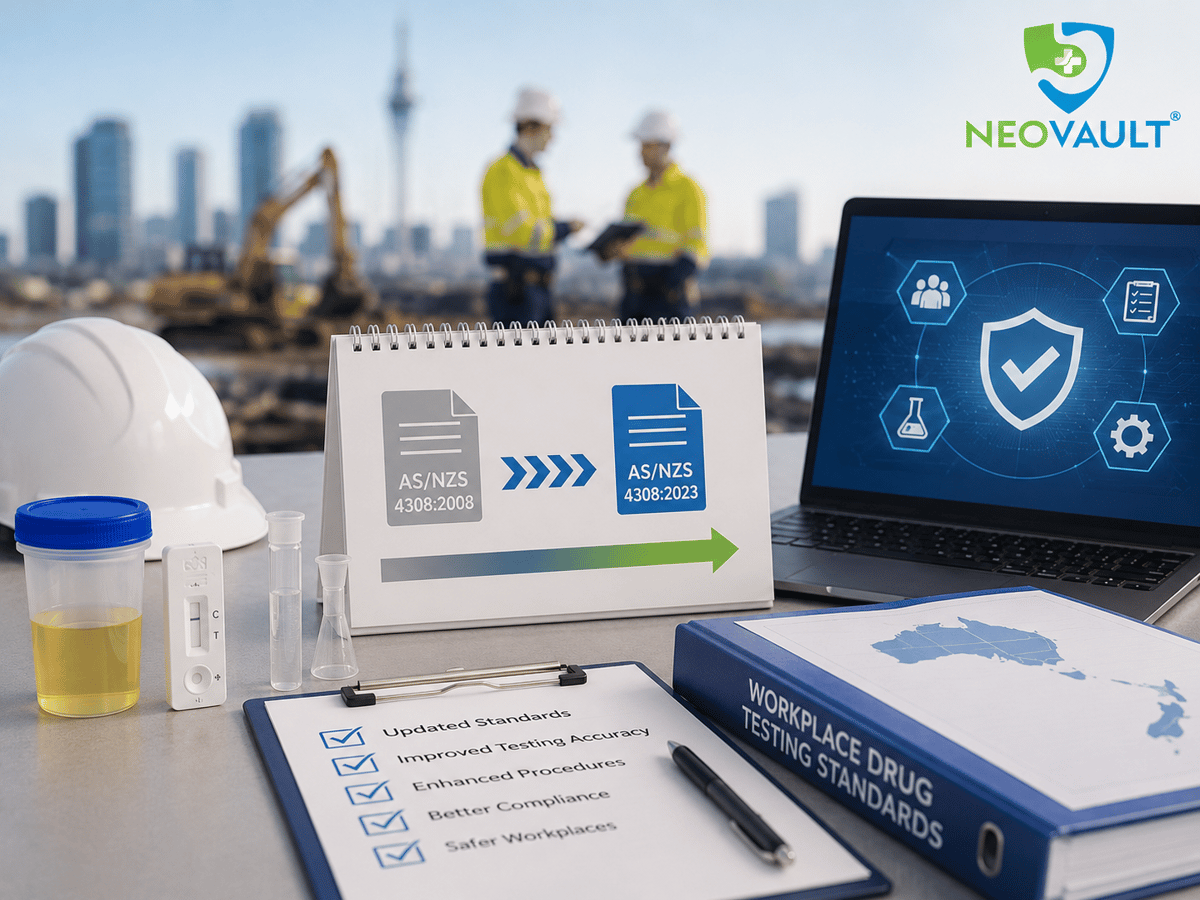
AS/NZS 4308:2023 Updates Transition Guide
The 2023 revision brings necessary adjustments to urine drug test cut off levels to reflect advanced testing technology. These precise thresholds are vital for accurate detection. The modifications help laboratories achieve the following:
A legally significant update in the standard is the shift in terminology used for reporting preliminary test results. This change is designed to prevent misunderstandings and clarify the exact status of an onsite screening result before further testing occurs.
Transitioning to the updated testing standard requires targeted actions from HR and Safety teams to maintain compliance. Employers must ensure their internal documentation and external provider procedures are fully aligned with the new requirements.
Employers face significant challenges with standard urine testing, including the heavy administrative burden of tracking paper records and distinguishing between historical use and active impairment. Furthermore, handling legal supplements that cause unexpected test failures complicates policy enforcement. These factors require Safety Managers to develop robust management strategies and adopt digital solutions to mitigate risks and maintain a fair, compliant workplace environment.
One complex issue facing HR managers today is the rise of legally available health supplements triggering failed drug tests. For example, according to a recent study on oral Δ8-THCV, individuals consuming legal cannabis-derived supplements can produce samples failing standard tests. This creates a difficult situation for employers who must differentiate between an employee using illegal narcotics and one taking a legal supplement.
A fundamental limitation of urine testing is detecting the presence of drug metabolites, which indicates historical use, rather than active impairment. An employee might consume a substance over the weekend and test positive on a Tuesday, even if completely sober at work. This requires Safety Managers to combine testing with broader impairment assessments and fitness-for-work observations, rather than relying solely on the laboratory result.
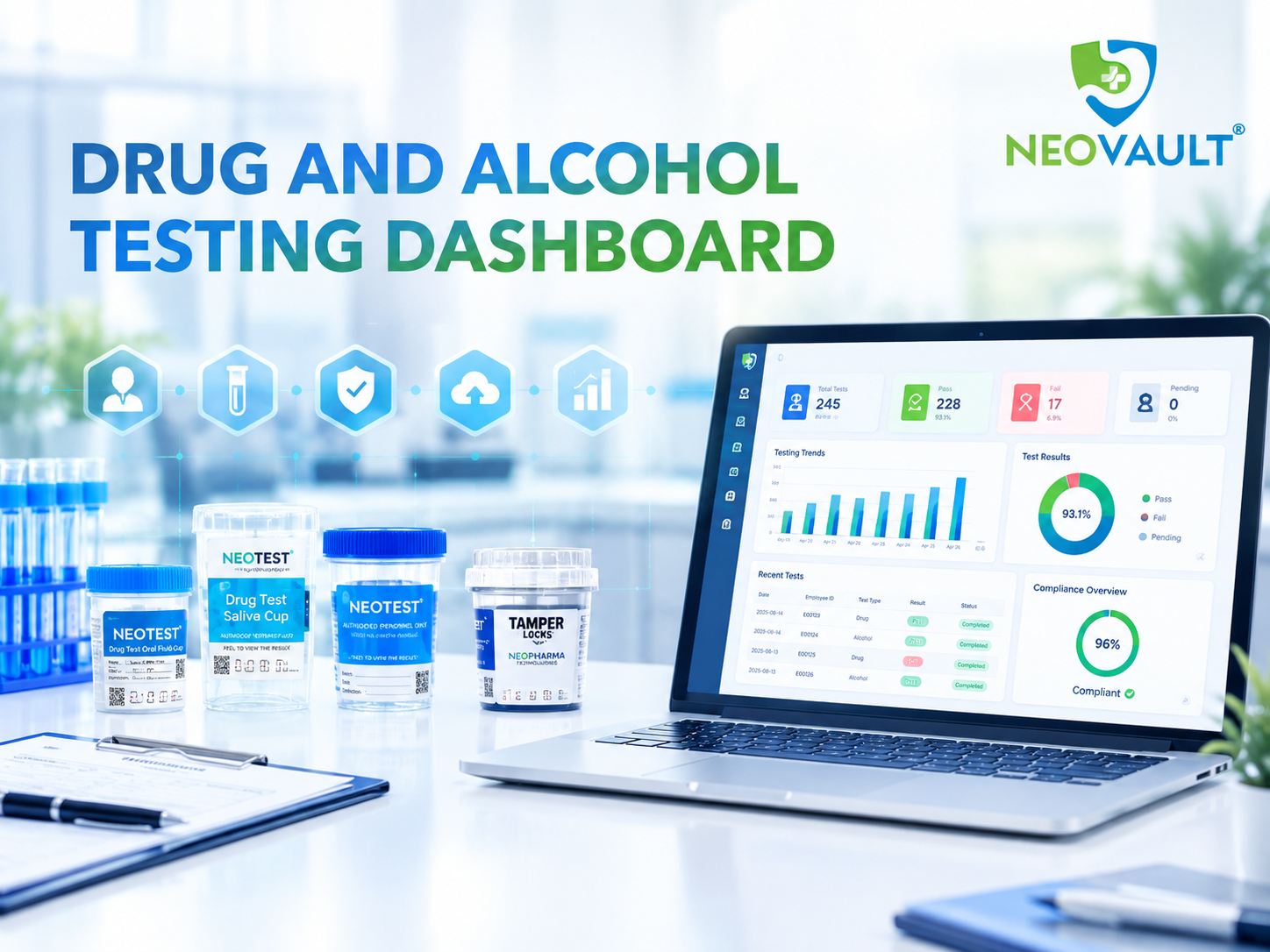
The AS/NZS 4308 standard requires a flawless chain of custody, which is notoriously difficult to maintain using physical paperwork. Relying on manual processes to track testing schedules creates a massive administrative burden and exposes businesses to severe compliance risks. The NEOVAULT platform resolves this by providing a secure SaaS solution that fully digitises your end-to-end testing workflow.
Transitioning to a paperless safety protocol involves three streamlined steps:
By adopting this digital workflow, organisations can confidently uphold the strict requirements of the nz drug testing standard as/nzs 4308 while drastically reducing their administrative workload.
Related reading: pre-employment drug testing in NZ, workplace drug and alcohol policy in NZ
No, the standard is not legally mandatory for all businesses by default. However, if an employer stipulates in their workplace policy or employment contracts that drug testing will be conducted in accordance with this rigorous framework, strict compliance then becomes a legally binding obligation for that specific organisation and its contractors.
The primary difference lies in the testing specimen. AS/NZS 4308 governs the strict procedures for urine drug testing, which typically has a longer detection window. Conversely, AS/NZS 4760 is the specific standard for oral fluid testing, which is generally preferred for detecting very recent use and assessing immediate active impairment.
Yes, businesses should update their policies to explicitly reference the 2023 version. Relying on the older 2008 standard means your internal procedures may not align with current scientific best practices and revised cut-off levels. This misalignment can potentially create severe legal vulnerabilities during employment disputes or safety audits.
Implementing the nz drug testing standard as/nzs 4308 is fundamental for protecting your workforce within a legally defensible framework. With the 2023 updates, staying informed about changing cut-off levels is crucial for robust safety policies. Managing the complexities of workplace drug testing NZ does not have to be an administrative nightmare. By centralising your compliance data, NEOVAULT empowers your organisation to track testing requirements seamlessly and securely manage sensitive records, allowing you to focus on keeping your people safe.