BLOG


Onsite drug and alcohol testing allows Australian employers to screen workers at their own worksites, but collecting results is only one part of managing a testing program. Paper forms, separate provider reports and delayed laboratory confirmations can leave safety teams without a reliable overview. Centralised reporting connects each collection event with its screening status, supporting documents and follow-up actions. This guide explains the field-to-reporting process, the records employers should retain, relevant Australian considerations and how NEOVAULT supports digital testing management across multiple locations.
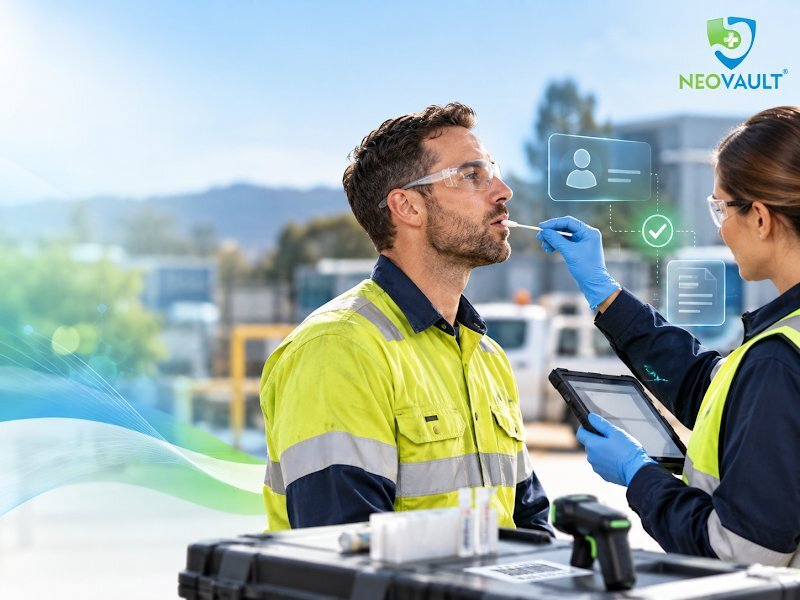
Onsite drug and alcohol testing brings trained collectors or authorised personnel to Australian workplaces for breath alcohol checks and urine or oral fluid drug screening. Employers may use it for pre-employment, random, post-incident or for-cause programs. Reliable reporting records the testing method, collection details and any required confirmation without treating preliminary findings as final.
Employers arranging on-site drug and alcohol testing Australia-wide should select methods according to risk, policy and relevant procedures:
A workplace testing program defines screening and record procedures.
Collectors and reviewers should distinguish:
A non-negative drug screen is not a confirmed positive or proof of impairment. Workplace decisions should follow the documented policy and review pathway, not a dashboard label alone.
Centralised drug testing reporting brings site records into a controlled system so safety and HR teams can see testing activity without assembling separate files. It connects collection details, result status and outstanding actions, while retaining traceability to the original event. This is especially useful when operations span remote worksites or several testing providers.
Paper records become harder to reconcile as testing grows. Common gaps include:
Digital records still need verification. An assigned reviewer should resolve mismatched site codes or missing follow-up details before reporting to management.
For multi-site drug and alcohol testing, central reporting should answer:
These issues are explored further in multi-site testing management.
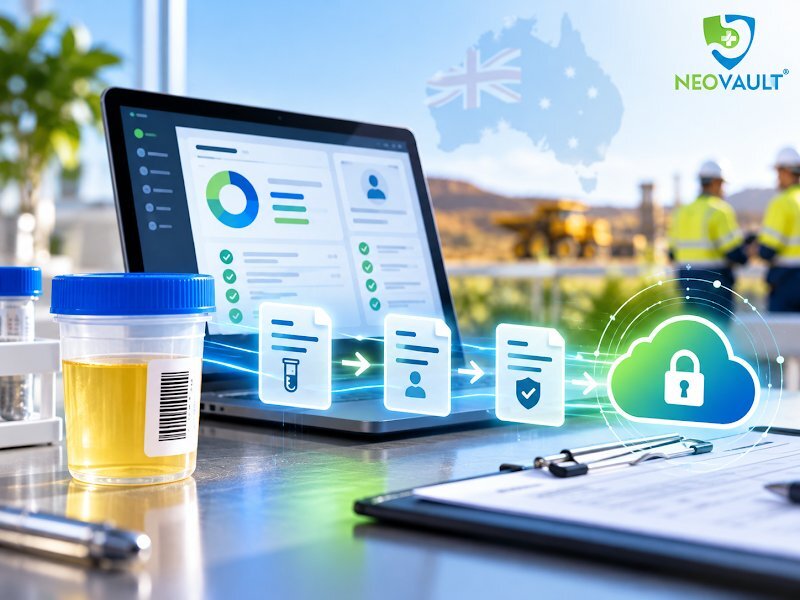
The connection begins when field staff capture a complete, traceable record and continues as data is synchronised into a secure shared system. Collection details, chain-of-custody events, screening outcomes and confirmation status should remain linked to one testing event. Each updated status should remain traceable to its original collection record.
Capture worker and site IDs, testing reason, collection time, method and collector. Include required acknowledgements and the sample QR or barcode identifier, where used, so the onsite event can be traced to its digital record.
Record the initial screening outcome and its status, then log time-stamped collection and handover events in the digital chain of custody. Note missing details, later amendments and the person responsible for follow-up.
At remote sites, capture records offline and synchronise after reconnection. Flag failed uploads and duplicates, and reconcile verified laboratory confirmations without overwriting screening history. Verify provider integrations: central reporting must distinguish records awaiting synchronisation from confirmed outcomes.
Authorised managers should review activity by site, date and program, track pending confirmations or incomplete records, and export audit histories where permitted. Access logs should identify who reviewed or changed the information.
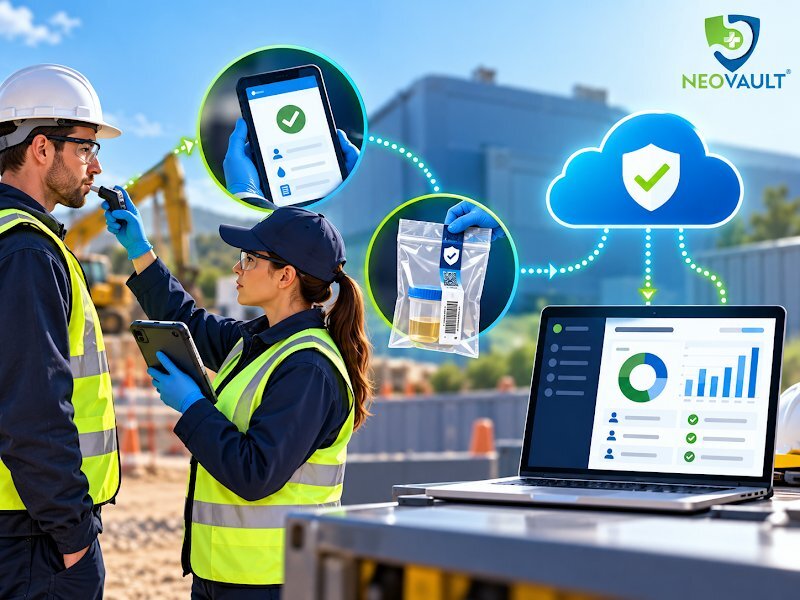
Digital chain of custody linked to centralised test reports
A useful reporting system shows what was collected, where the test took place, who handled the record and what stage the result has reached. It also distinguishes individual information from aggregate operational metrics. Safety teams need traceable onsite drug testing results, while senior managers often need a narrower view of activity and outstanding actions.
Use consistent fields across providers:
| Record field | Why it matters |
|---|---|
| Worker, test and site identifiers | Link the event to the correct worker and site. |
| Date, method and collector | Identify when and how testing occurred. |
| Screening and confirmation status | Separate preliminary and confirmed outcomes. |
| Chain-of-custody events | Trace sample handovers. |
| Review history and follow-up | Track actions and decisions. |
A drug and alcohol register supports reporting. Without linked identifiers, two entries could represent the same collection event and distort site totals.
For onsite drug and alcohol testing, keep aggregate reporting separate from sensitive individual results. Track:
SafeWork NSW testing guidance recommends that workplace policies specify how results are stored, handled, reviewed and conveyed to management.
Australian employers should assess testing and reporting arrangements against their risk profile, workplace policy and relevant standards. Digital records help with administration, but software alone cannot establish that a testing program is lawful or appropriate. Collection procedures, worker consultation, privacy arrangements and review responsibilities all need attention before the system is rolled out.
Consider the following Australian references:
Safe Work Australia's guidance explains that businesses must manage drug and alcohol risks where relevant; it does not impose a universal testing program on every workplace.
When assessing workplace drug testing software, check:
For onsite drug and alcohol testing, decide who will:
Before choosing a provider, request a demonstration of a failed upload, a pending confirmation and a restricted report export. These practical checks often reveal gaps that feature lists miss.
NEOVAULT, developed by Neopharma Technologies Limited, is a secure SaaS platform for digitising workplace drug, alcohol and impairment testing management. The myNEO Mobile App supports field data capture, the Drug & Alcohol Testing Module manages testing workflows and chain-of-custody records, and Reporting & Analytics provides central visibility across authorised teams and worksites.
myNEO supports digital field capture through:
The Drug & Alcohol Testing Module provides:
The NEOVAULT platform provides:
The Impairment Risk Management (IRM) Module adds optional fitness-for-duty insights, distinct from confirmed drug or alcohol results. NEOVAULT is not a sample-collection provider. Ask for a demo that traces a record from onsite collection to central review.
Employers comparing onsite testing and digital reporting often ask about provider compatibility, remote connectivity and the meaning of preliminary results. The answers depend on the approved testing process, the reporting tool and each organisation's responsibilities. The following points clarify what centralised reporting can support and what still requires a qualified provider or appropriate workplace decision.
Yes, where providers supply consistent data and the employer establishes a reliable import and verification process. Standardise site identifiers, collection timestamps, test methods and result labels. Do not assume every provider or laboratory connects automatically to a software platform; confirm available integrations and the responsibilities for checking imported records.
Yes, when the mobile tool supports offline entry and later synchronisation. Collectors should follow device security procedures and check that uploads have completed after reconnecting. Until a record synchronises, central managers may see an outdated status. Workflows should also identify duplicate entries or failed transfers before reports are finalised.
No. A non-negative screening result, termed 'not-negative' in AS/NZS 4308:2023 urine reporting, identifies a finding that may require laboratory confirmation under the applicable procedure. It is not a confirmed positive result. Record the initial status separately, preserve chain-of-custody information and communicate outcomes only through authorised channels. A screening result alone should not be treated as proof of impairment.
No. A reporting platform can organise evidence, support access controls and make outstanding steps more visible, but it cannot replace risk assessment, consultation, valid testing methods or fair workplace procedures. Employers must consider the applicable jurisdiction, industry rules and their own documented policies, and seek professional advice where necessary.
No. NEOVAULT is a testing management software platform, not an onsite collection provider. Collection and any required laboratory analysis remain the responsibility of appropriately qualified personnel and service providers. NEOVAULT supports digital collection records, chain-of-custody workflows and reporting, helping employers coordinate information from field activity without replacing the underlying testing service.
Effective onsite drug and alcohol testing needs a dependable path from field collection to reviewed results and central oversight. Consistent identifiers, digital chain-of-custody records, clear confirmation statuses and controlled access help Australian employers manage testing across locations while protecting sensitive information. The right approach combines sound workplace procedures with practical reporting tools. NEOVAULT brings mobile collection workflows and centralised reporting into one platform for organisations seeking better visibility. Explore the NEOVAULT platform and request a demo to discuss your testing management needs.