-Long-Transparent.png?width=200&height=47&name=NEOVAULT-Sheild-Neo-(R)-Long-Transparent.png)
BLOG

Pre employment drug testing NZ is a critical screening step for employers in safety-sensitive industries, yet it brings complex legal and privacy considerations. As prescribed medical cannabis becomes more widespread, human resources and safety managers face the ongoing challenge of balancing workplace safety with candidate rights. Relying on outdated methods can lead to losing qualified applicants.
This guide outlines the current legal framework under the Health and Safety at Work Act 2015, explores the necessary shift from zero-tolerance policies to cognitive impairment testing, and details how to implement a compliant screening programme. By understanding these modern requirements, employers can digitise workflows and build a fairer, safer work environment.
 Pre Employment Drug Testing NZ Guide
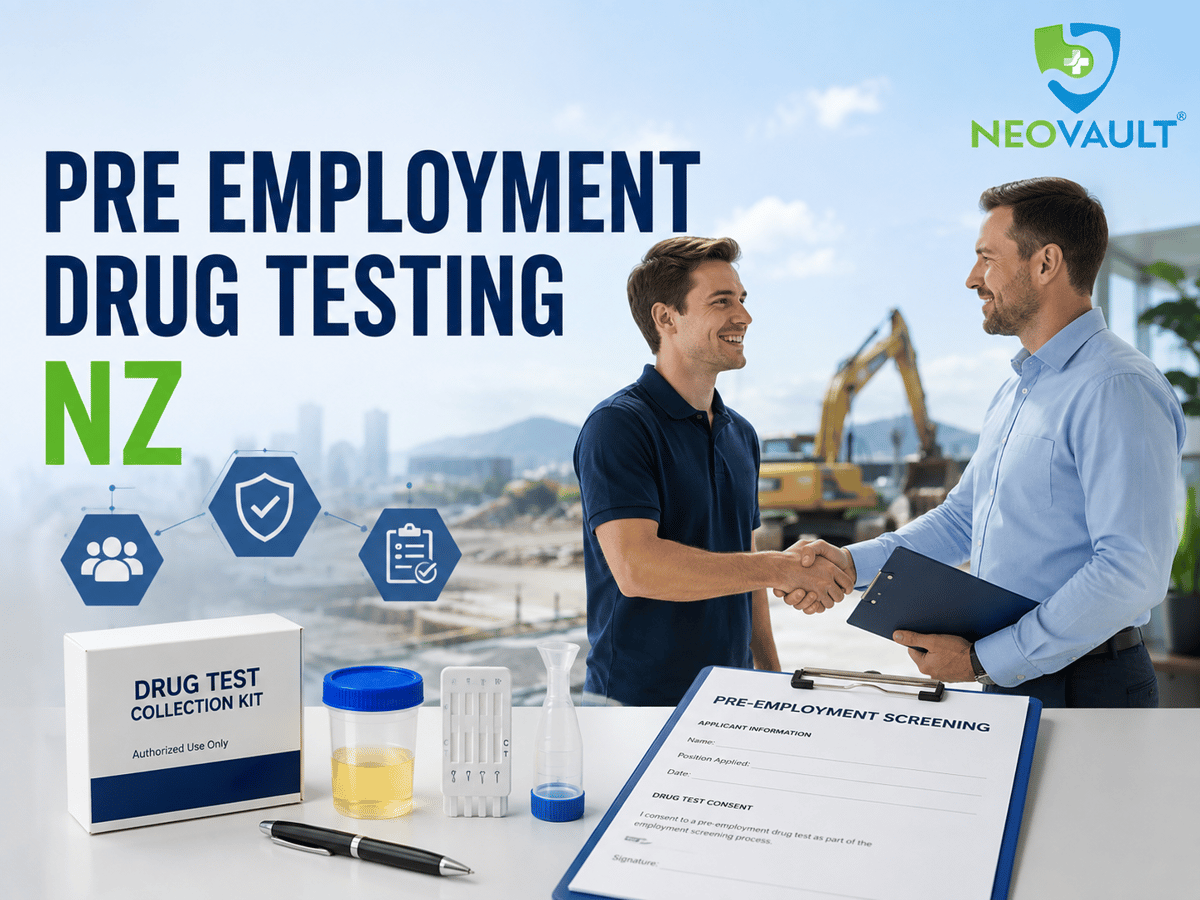
Pre-employment drug testing in NZ is a screening process used by employers to determine if a job candidate uses illicit drugs or alcohol before finalising a hire. It is primarily justified for safety-sensitive roles where impairment poses a significant risk to health and safety under current legislation.
A comprehensive workplace drug testing policy NZ helps establish clear expectations from the very beginning of the employment relationship. Organisations implement these initial checks to:
Yes, NZ employers can mandate pre-employment drug tests if the requirement is reasonable, clearly stated in the job advertisement, and included as a condition in the employment agreement. Testing must always comply with the Privacy Act 2020 and the Human Rights Act 1993 to protect candidate rights.
Under the Health and Safety at Work Act 2015, employers hold a primary duty of care to ensure workplace safety. Implementing initial screenings is a practical step to demonstrate proactive safety management because it helps businesses to:
While physical safety is paramount, employers must strictly balance this objective with the candidate's fundamental right to privacy. Because collecting bodily samples is highly intrusive, businesses must adhere to strict guidelines:
Zero-tolerance policies for pre-employment drug testing often unfairly penalise candidates using prescribed medical cannabis. Recent studies demonstrate that medical cannabis has a minimal acute impact on cognitive function, making automated rejection based on urine or saliva tests a flawed approach for assessing true fitness for duty.
The rise of medical cannabis drug testing workplace NZ issues requires a shift in how employers interpret test results. Traditional biological tests detect THC presence, but they do not measure actual impairment. A recent medical cannabis cognitive function study highlights critical points for employers:
Because traditional drug tests cannot accurately pinpoint current impairment, forward-thinking organisations are adopting cognitive impairment assessments. Instead of relying solely on biological samples, these digital methods offer a fairer, more objective evaluation by:
To implement a compliant pre-employment testing policy in NZ, employers must define safety-sensitive roles, consult with staff, document the screening requirement in employment agreements, and use accredited testing methods that align strictly with AS/NZS 4308 or AS/NZS 4760 standards.
A successful policy begins with clear definitions. You must identify exactly which roles pose a significant risk if performed while impaired. To ensure thorough compliance, employers should:
Employers must select testing methods that meet national standards to ensure accuracy and fairness. In New Zealand, this means adhering to AS/NZS 4308 for urine testing or AS/NZS 4760 for oral fluid testing. Utilising accredited providers and certified collection processes ensures the chain of custody remains intact. This prevents tampering and guarantees that the results can withstand legal scrutiny if a candidate challenges a withdrawn job offer.
When a rapid screening returns a non-negative result, human resources should never automatically disqualify the candidate. To reduce legal exposure and avoid unfair hiring decisions, organisations must:
NEOVAULT is a secure SaaS platform that digitises workplace drug, alcohol, and impairment testing. It helps NZ employers manage pre-employment screening workflows, track compliance in real time, and integrate cognitive impairment assessments through its specialised Impairment Risk Management (IRM) module.
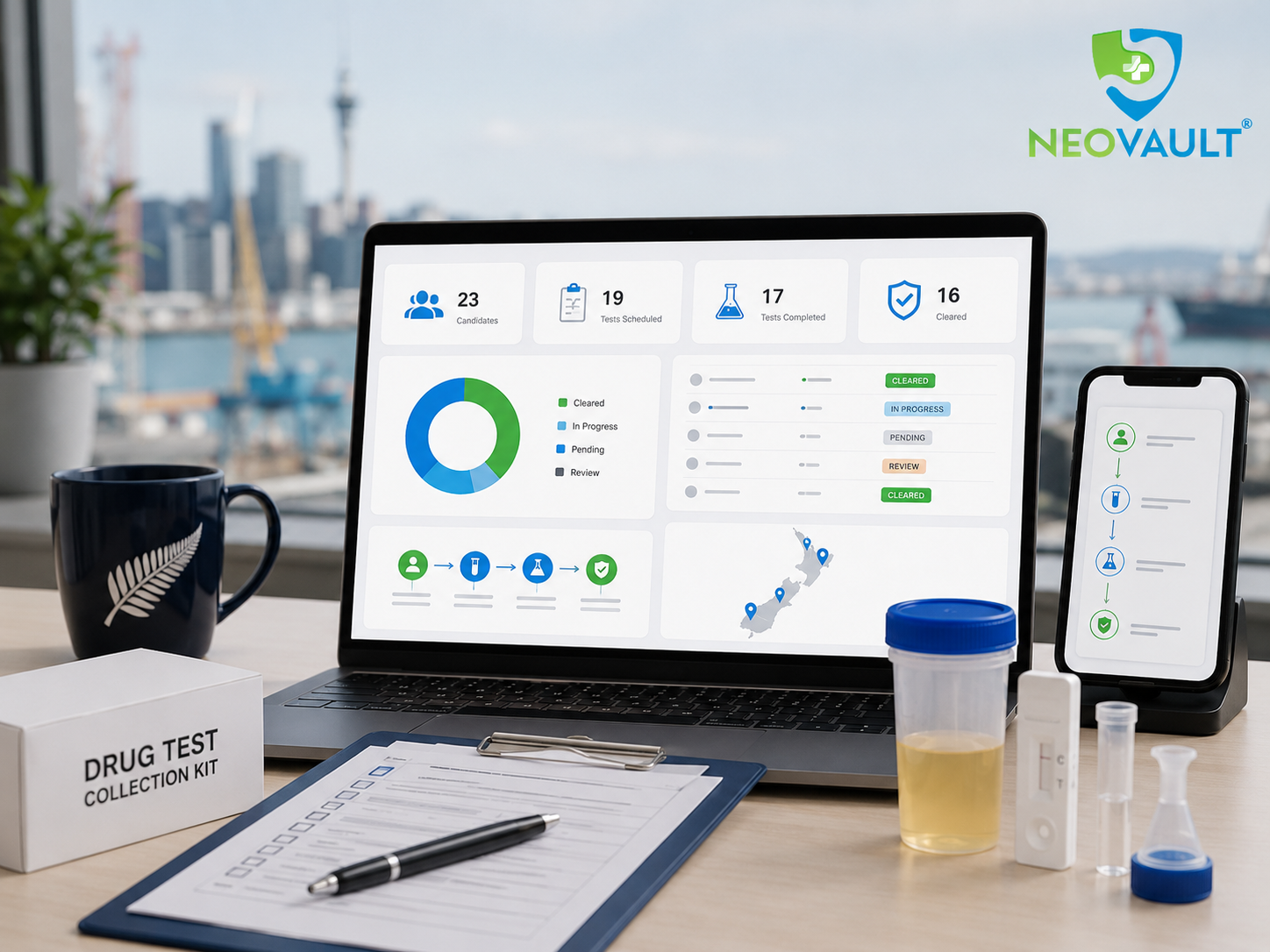
Managing paper trails and disconnected lab results slows down the hiring process and creates data silos. The NEOVAULT platform resolves this by offering an end-to-end digital workflow that captures, manages, and analyses test results efficiently across multiple operational sites. By adopting this secure SaaS solution, businesses can centralise their compliance data and gain several key capabilities:
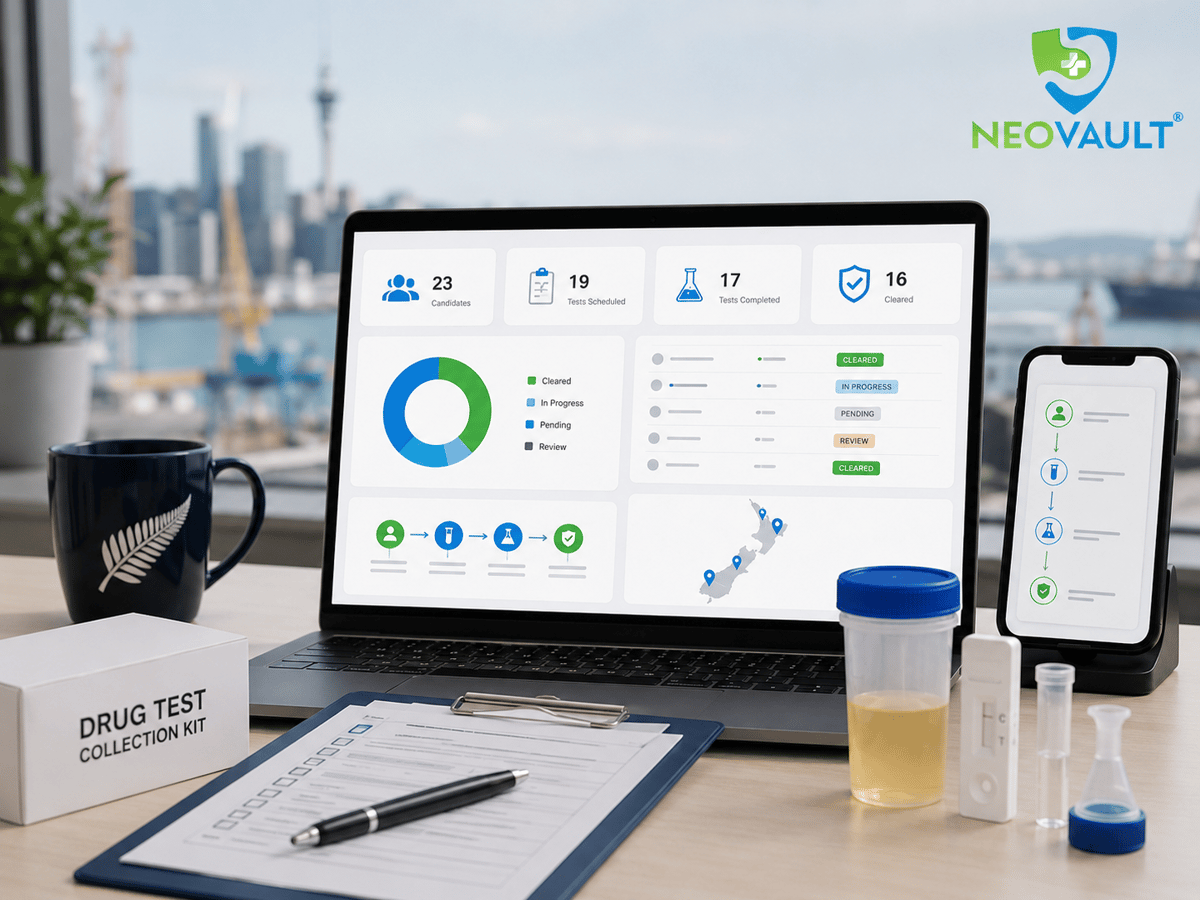 NEOVAULT pre employment drug testing NZ
Related reading: workplace drug and alcohol policy in NZ
Employers can legally withdraw the job offer if a candidate refuses to undergo the screening. However, this is only permissible if the testing requirement was clearly communicated beforehand in both the job advertisement and the formal employment contract. Transparency ensures that candidates are fully aware of the prerequisites before accepting any offer.
No, it is highly difficult to justify legally under current regulations. The Privacy Commissioner generally advises against testing standard office workers or administrative staff. In these environments, the severe intrusion into an individual's privacy significantly outweighs the minimal safety risks involved. Employers must always prove that testing is strictly proportionate to the role.
No, not necessarily. Forward-thinking employers should evaluate actual impairment rather than relying solely on the presence of a substance. A qualified Medical Review Officer must thoroughly assess the non-negative result. Furthermore, utilising digital cognitive impairment tools helps determine if the candidate is genuinely fit to work, ensuring fair treatment for medical cannabis patients.
Navigating pre employment drug testing NZ requires a careful balance of workplace safety, privacy rights, and changing medical landscapes. By focusing on safety-sensitive roles, updating employment agreements, and moving beyond outdated zero-tolerance policies to measure actual impairment, employers can maintain compliance without unfairly excluding qualified candidates.