-Long-Transparent.png?width=200&height=47&name=NEOVAULT-Sheild-Neo-(R)-Long-Transparent.png)
BLOG

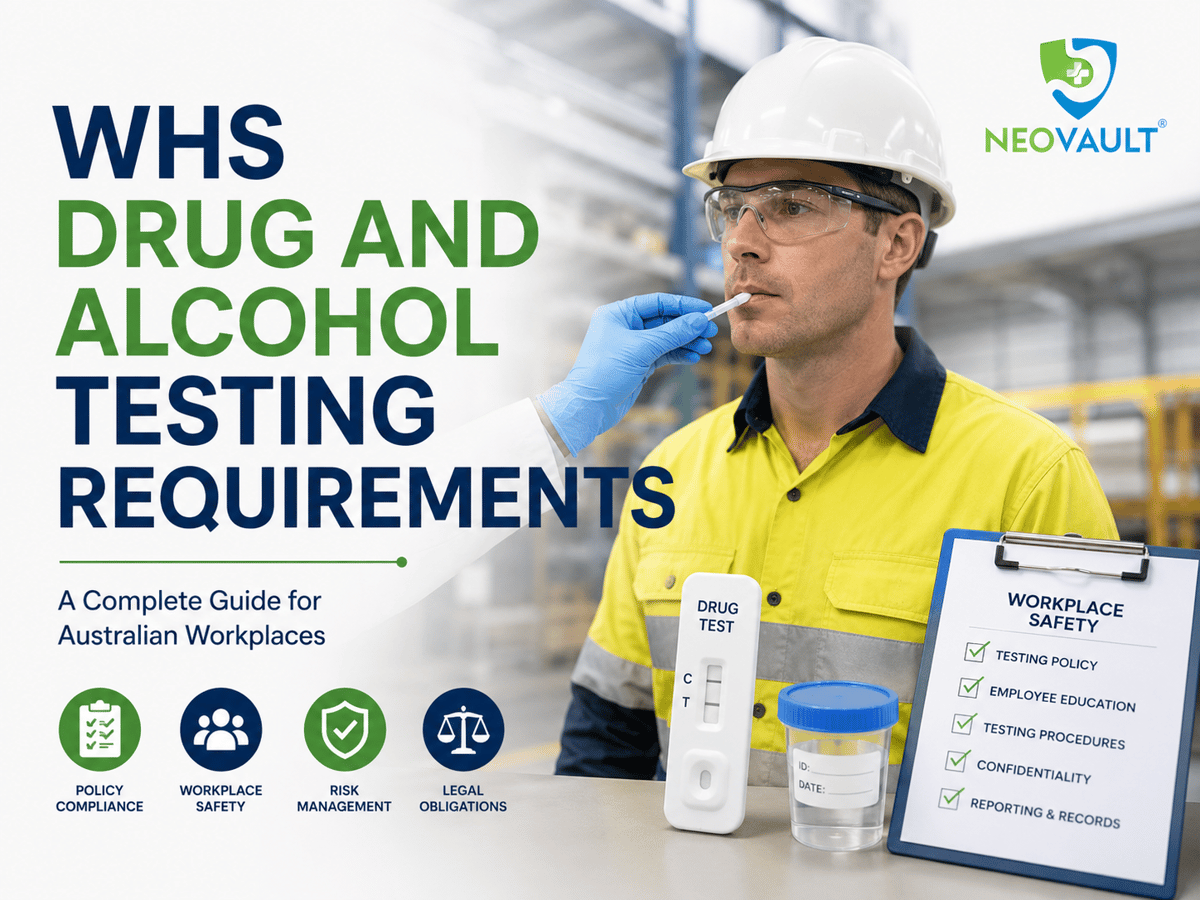
Navigating WHS drug and alcohol testing requirements is a critical responsibility for HR and Safety Managers across Australia. Under the Work Health and Safety (WHS) Act, businesses hold a primary duty of care to provide a safe working environment. This involves managing the risks of workplace impairment effectively.
This guide breaks down the legal frameworks, strict Australian Standards (AS/NZS), and modern strategies required to implement a structured testing programme. Whether you are defining fitness for work policies or standardising testing protocols, understanding these compliance rules ensures site safety and protects your workforce.
WHS drug and alcohol testing requirements in Australia
While there is no single universal law mandating drug and alcohol testing in Australia, WHS legislation requires employers to manage impairment risks under their general duty of care. Fulfilling these WHS drug and alcohol testing requirements is highly recommended for high-risk industries and must comply with specific Australian Standards to be legally defensible.
According to Safe Work Australia, a Person Conducting a Business or Undertaking (PCBU) must ensure the health and safety of workers. This duty of care WHS mandate means taking reasonable steps to eliminate or minimise risks associated with alcohol and drug use. Establishing a clear policy and conducting regular risk assessments are foundational steps.
Workers also share responsibility for workplace safety. Employees must take reasonable care of their own health and ensure their actions do not put others at risk. This includes arriving fit for work and not being impaired by substances while performing their duties.
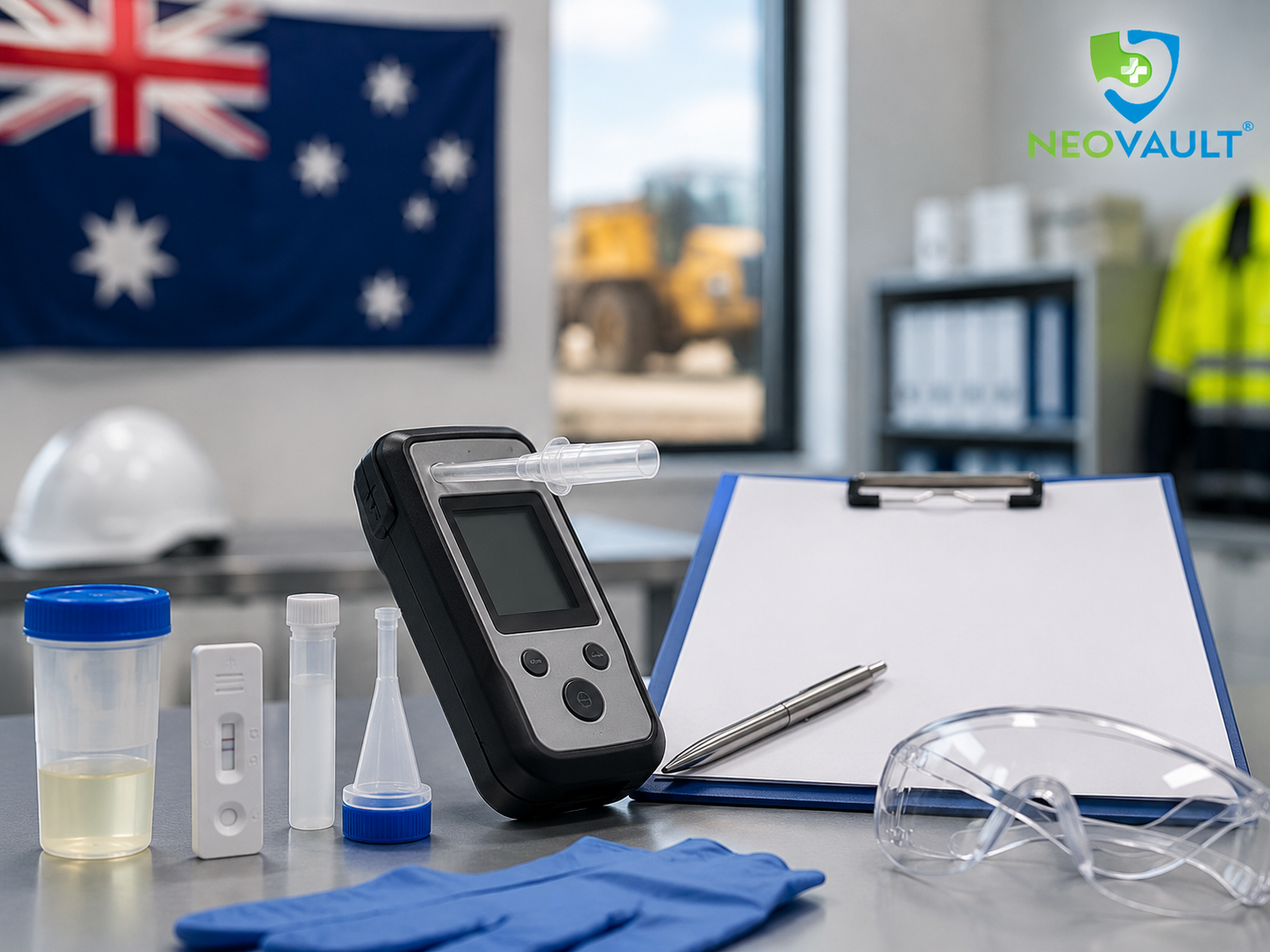
To ensure testing procedures are reliable and legally valid, businesses must align their programmes with strict Australian Standards to meet WHS drug and alcohol testing requirements. These guidelines dictate the correct procedures for specimen collection, handling, and laboratory analysis. The table below summarises the primary standards used to evaluate fitness for work.
|
Standard |
Testing Method |
Primary Application |
|
AS/NZS 4308 |
Urine Testing |
Detects historical substance use. Commonly used in pre-employment screening. |
|
AS/NZS 4760 |
Oral Fluid (Saliva) |
Detects recent substance use. Ideal for random and post-incident site testing. |
|
AS 3547 |
Breath Alcohol |
Measures current blood alcohol concentration (BAC). Used across all testing triggers. |
This standard governs the collection and analysis of urine specimens. Urine testing provides a longer detection window, making it suitable for identifying lifestyle habits during pre-employment medicals. However, it does not necessarily indicate current impairment.
Oral fluid testing detects the presence of drugs consumed recently, typically within the last 24 hours. This method is highly effective for identifying immediate safety risks before an employee begins a high-risk task.
Breath testing instruments must meet AS 3547 specifications. These devices provide immediate, quantifiable results regarding an individual's current blood alcohol level, allowing safety managers to take prompt action if a worker exceeds the permitted limit.
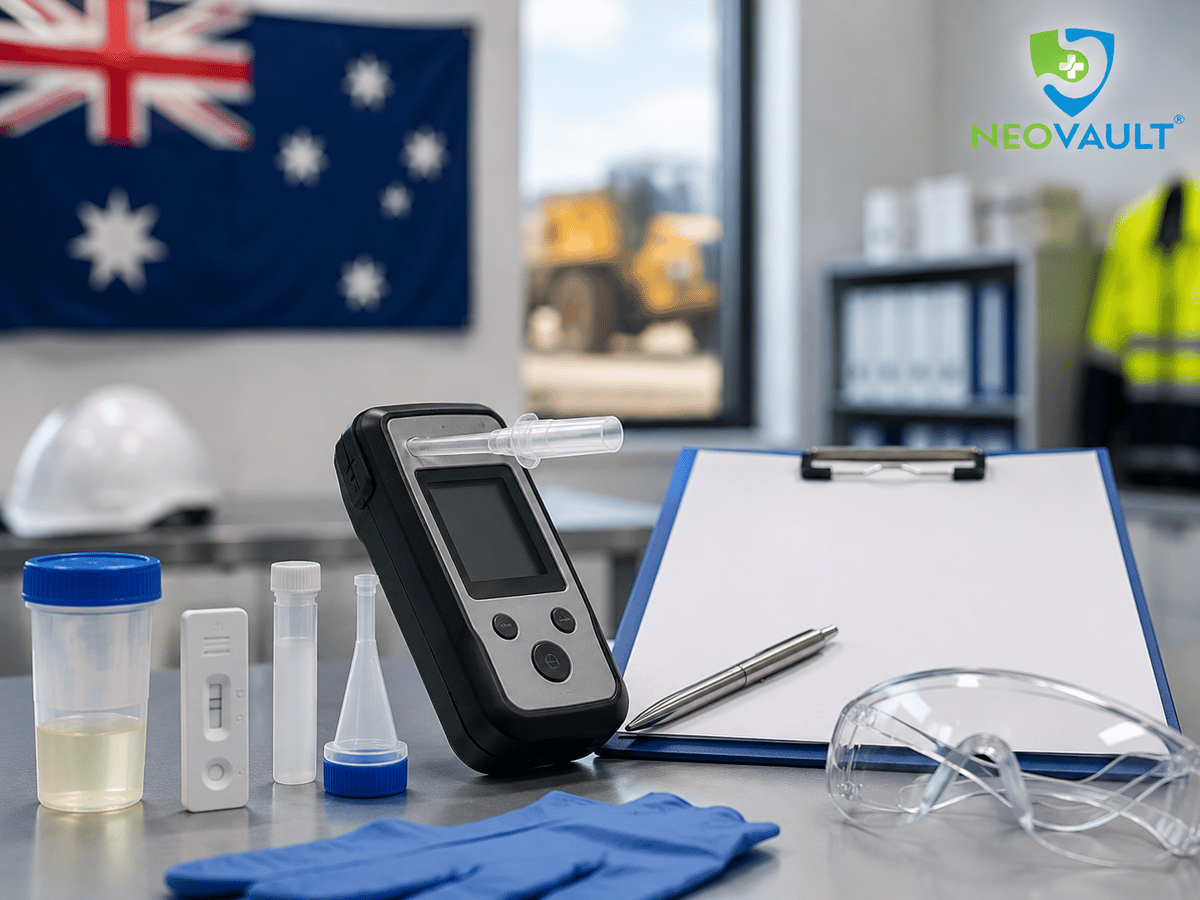
Key Australian Standards for Workplace Testing
Chemical testing detects the presence of a substance in the body, but it does not accurately measure real-time cognitive or motor impairment. Modern safety management is shifting towards objective, app-based cognitive assessments to evaluate a worker's true capacity to perform safely on site.
Traditional drug testing has clear limitations. Substances like cannabis can remain detectable in the body for days or weeks after use. A positive chemical test proves exposure but fails to confirm if the worker is currently impaired. This discrepancy can complicate disciplinary actions and workplace drug testing laws Australia, especially when employees argue their capacity to work was unaffected.
Recent technology now allows businesses to measure actual neurophysiological impairment rather than just chemical presence. Impairment Science peer-reviewed studies offer clear scientific evidence supporting this shift. By extracting findings from their published clinical trials, safety managers can observe the clear advantages of cognitive testing:
By relying on peer-reviewed validation, modern WHS frameworks are increasingly adopting these tools to supplement or replace outdated fluid testing.
Implementing a testing programme requires a clear, consultative approach. Safety Managers must define strict testing triggers, secure worker privacy, and digitise records to maintain a legally sound workplace drug and alcohol policy. Consistent enforcement is critical to ensuring long-term site safety and WHS compliance.
To avoid legal disputes and ensure workforce cooperation, your rollout should follow these structured steps:
Handling sensitive medical data requires strict adherence to privacy laws. Your policy must address the following administrative elements:
If your organisation struggles to organise and digitise these records safely, utilising an integrated software solution like NEOVAULT IRM helps manage compliance and securely store sensitive health data without administrative burden.
Related reading: drug and alcohol testing course, workforce compliance management
No, there is no blanket law making testing mandatory for all businesses. However, WHS laws require employers to manage safety risks. Testing is strongly recommended and often mandated by industry-specific regulations for high-risk sectors like mining, construction, and heavy transport.
An employee can refuse a test, but if the business has a clearly defined drug and alcohol policy workplace agreement in place, refusal can be treated as a breach of contract or policy. This can potentially lead to severe disciplinary action or termination.
AS/NZS 4308 sets the standard for urine drug testing, which detects historical drug use over a longer period. AS/NZS 4760 governs oral fluid testing, which focuses on identifying recent drug consumption and immediate safety risks within the past 24 hours.
To standardise your testing programmes, digitise your records, and confidently meet all WHS drug and alcohol testing requirements, discover how NEOVAULT IRM can help your business today.