-Long-Transparent.png?width=200&height=47&name=NEOVAULT-Sheild-Neo-(R)-Long-Transparent.png)
How to keep audit ready drug testing records: principles and checklist

Neovault Team
Audit ready drug testing records are records you can produce in full, in order and with a time-stamped history when an inspector or a lawyer asks. Many HR and safety managers cannot do that within two hours. Paper logs and subjective visual records leave gaps. This guide sets out the principles of a defensible program and a checklist for the documents to keep.
Why do paper and manual records fail audits?
Manual records fail audits because they lack data integrity. Paper chain of custody forms are easy to lose or alter, and visual readings of test results depend on one person's judgment. Regulators and courts give little weight to records that cannot show who did what and when.
Why paper chain of custody forms fail
- Damage and loss. A form can be torn, water-damaged or filed in the wrong cabinet, which breaks the chain.
- Human error. One missed signature, a wrong tick box or illegible handwriting can undermine a result.
- Slow retrieval. Searching thousands of paper files in front of an inspector signals weak oversight.
The legal risk of subjective testing
A 2021 Johns Hopkins University study found that approaches built on human observation, such as traditional field sobriety tests, are limited in detecting cognitive impairment. The researchers pointed to computerized behavioral tests that produce time-stamped reports and measured results. Objective, time-stamped data is much harder to challenge than an observer's notes.
What are the core principles of an audit-ready program?
An audit-ready program rests on four principles: one central source of truth, unbroken time-stamped trails, strict confidentiality controls, and regular internal mock audits. Each one removes a common cause of failed inspections.
One source of truth
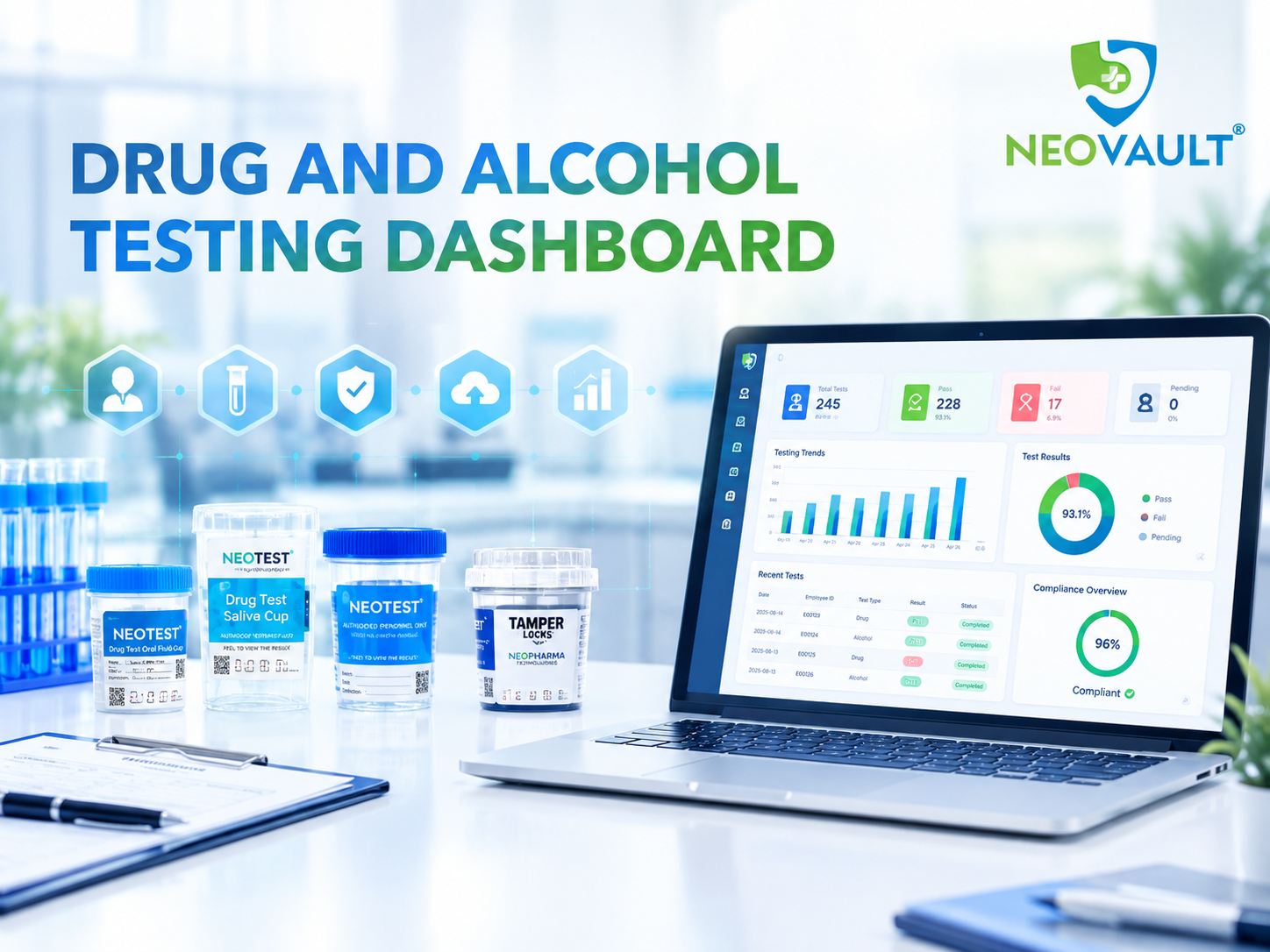
Results scattered across spreadsheets, personal email and filing cabinets are the main cause of delay during an inspection. Keep them in one secure system. Your drug and alcohol testing analytics dashboard then shows compliance rates and exports complete histories on request.
- Authorized staff can pull full histories inside the 48-hour window regulators expect.
- Duplicate and conflicting records disappear.
- Annual Management Information System (MIS) reports for agencies such as the DOT are quicker to build.
Unbroken audit trails
Every change to a sample or record should leave a footprint. For a defensible trail, record who collected the sample and who checked the result, the exact time of each action, and the location of the test. Our guide to the drug and alcohol testing audit trail explains the fields in more detail.
Strict confidentiality
Drug test results are sensitive medical data. Keep them away from general personnel files.
- Restrict access to authorized roles, such as the Designated Employer Representative (DER).
- Encrypt cloud storage.
- Separate medical data from standard HR files, digitally and logically.
Routine mock audits
Do not wait for a regulator to find the gaps. Run an internal audit each quarter: check recent forms for missing signatures, confirm that random selection pools were generated without bias, and check that every employee acknowledgment matches the current policy.
What records should you keep? A compliance checklist
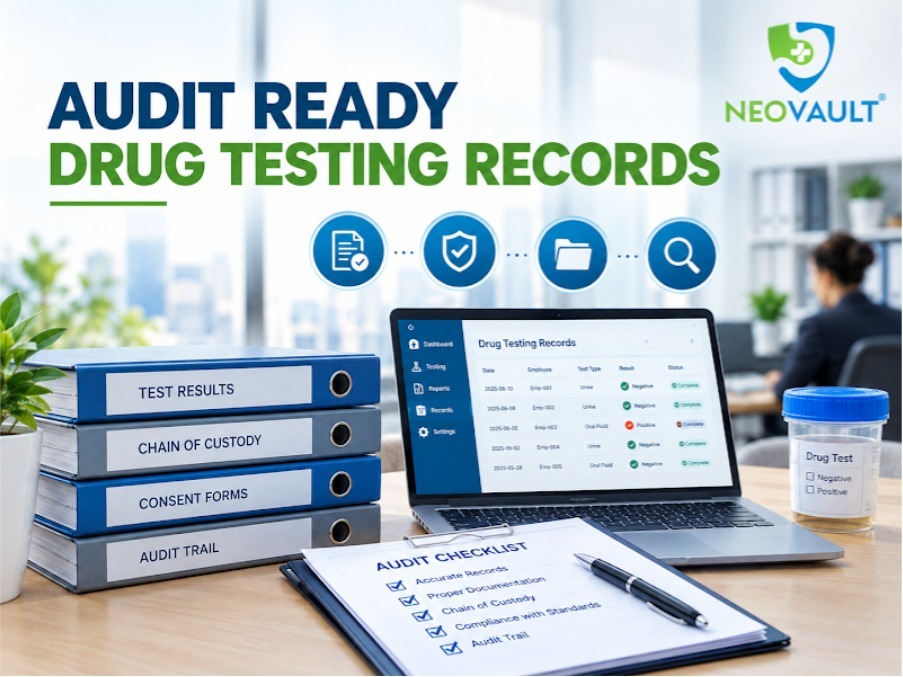
You should keep up-to-date written policies with employee acknowledgments, random selection logs, complete Chain of Custody Forms (CCFs) and Medical Review Officer (MRO) reports. Each must meet the retention period that applies to your regulator.
Program administration
- The current written drug and alcohol policy. See our guide to the drug and alcohol register for how to log it.
- Signed acknowledgment forms from every active worker.
- Certificates showing supervisors completed reasonable suspicion training.
Testing records by category
- Random testing. Software-generated logs that show selection came from an algorithm and not from a person.
- Reasonable suspicion. A written incident report from the supervisor that describes what they saw before the test was requested.
Operational evidence and chain of custody
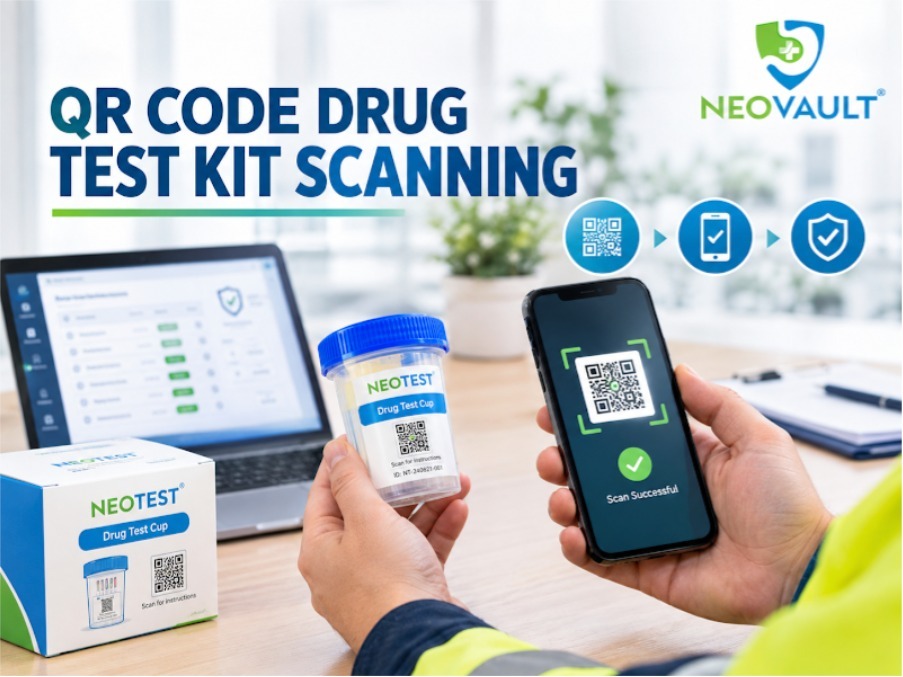
This is the focus of most inspections. Without a complete CCF, a test result may not stand. Many employers now use QR code scanning of drug test kits to capture results and custody in one step. Check that your files hold:
- Completed CCFs signed by the donor, the collector and the laboratory.
- Final reports signed by an independent MRO.
Retention periods
Keeping records too long or deleting them too early are both violations. Under US DOT rules in 49 CFR Part 40, negative results are kept for one year. Positive results, refusals to test and return-to-duty records are kept for five years. In Australia and New Zealand, check the requirements of AS/NZS 4308 and AS/NZS 4760 and your state regulator. Our summary of DOT drug testing requirements covers the US rules.
How does NEOVAULT produce audit ready drug testing records?
NEOVAULT digitises the testing process and turns paper logs into time-stamped digital records. Data sits on secure cloud infrastructure, so it is central, searchable and ready for an audit. Neopharma Technologies Limited develops the platform.
- Digital CCF. The software generates custody forms with secure electronic signatures.
- Objective data capture. Results are read from the testing device and stamped with the time, which removes subjective interpretation.
- Real-time reporting. Safety directors export a full audit history in one step.
How do you run a mock audit?
A mock audit is a dry run of a real inspection, carried out by someone who did not collect the records. Pick a sample of recent tests, ask for the full file on each one, and time how long it takes to produce. If you cannot assemble a file in under two hours, you have found a gap to fix before an inspector does.
- Pick a sample. Choose ten tests across sites, shifts and test types, including at least one random test and one reasonable suspicion test.
- Pull the whole file. For each test, gather the CCF, the result, the MRO or laboratory report and the policy acknowledgment for that employee.
- Check each link. Confirm that names, dates and times match across documents and that no signature is missing.
- Record the gaps. List every missing or inconsistent item with an owner and a due date.
- Repeat each quarter. The second run shows whether your fixes held.
Keep the results of each mock audit. They show an inspector that you monitor your own program, which counts in your favor if a record is found wanting.
Frequently asked questions
How long should we keep drug testing records for an audit?
It depends on the regulation. The US DOT requires negative results to be kept for one year and positive results for five. Always check the local standard and your own policy so your audit ready drug testing records stay compliant.
Can digital records replace paper chain of custody forms?
Yes, where the regulator accepts them. Digital CCFs with time stamps and secure electronic signatures cut human error and data loss. Auditors like them because the trail is complete and shows any change.
Why is human subjectivity a risk in drug testing?
A visual reading depends on one person and can be biased. Courts and auditors prefer machine-read results that carry a time stamp and a measured value.
Facing an inspector is far less stressful when your records are digital, central and complete. Keeping audit ready drug testing records protects you from fines and from disputes with employees. To see how this works in practice, ask the Neopharma Technologies team for a NEOVAULT demo.