-Long-Transparent.png?width=200&height=47&name=NEOVAULT-Sheild-Neo-(R)-Long-Transparent.png)
Industry News


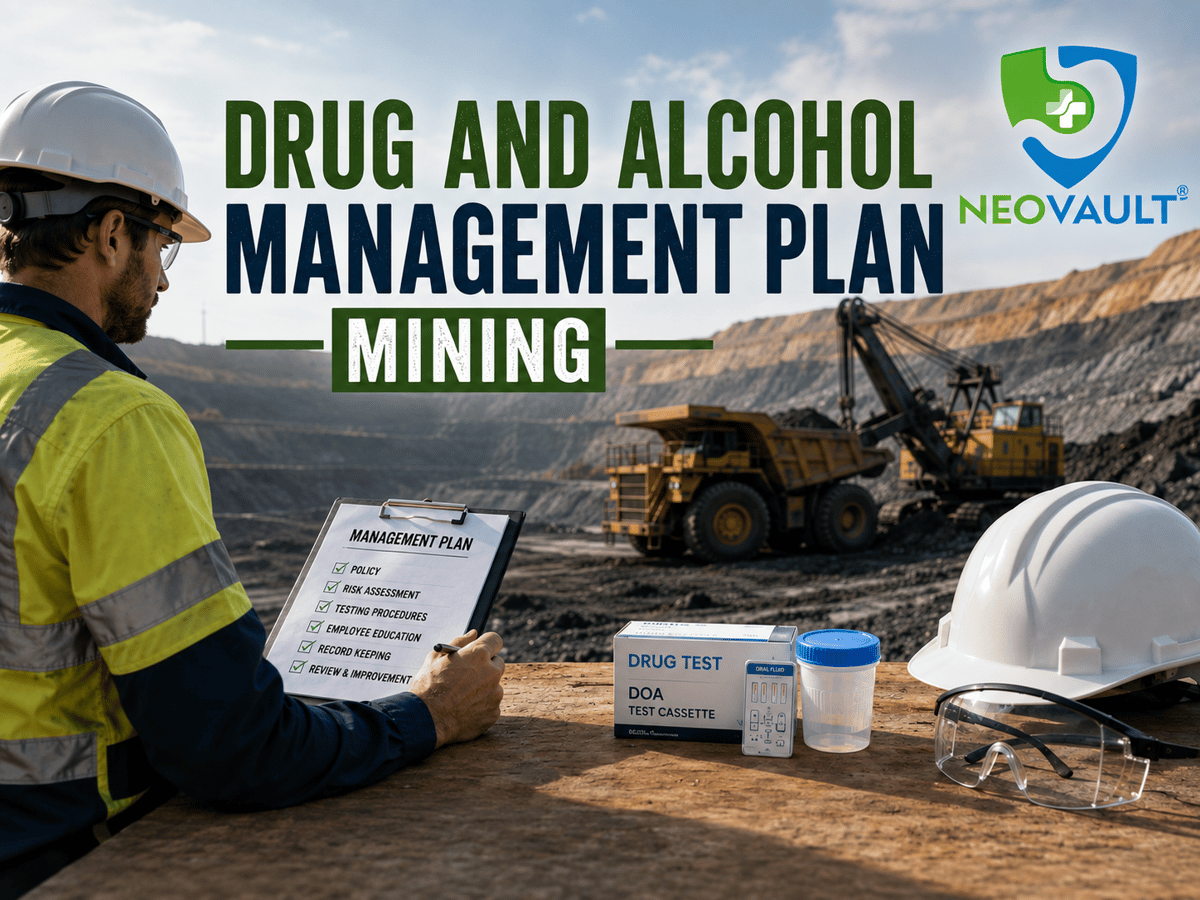
Operating a mine involves high-risk environments, making a robust drug and alcohol management plan mining operators can rely on is an absolute necessity. For Safety and HR Managers, building a compliant DAMP goes beyond meeting basic regulations; it is a critical component of your overall mine safety management system. This guide explores how to establish, enforce, and digitise your AOD policy mining framework across Australian sites.
We will cover legal obligations, including adherence to AS/NZS 4308 and AS/NZS 4760, and explain how to streamline compliance seamlessly. By integrating a modern fitness for work mining solution like NEOVAULT into your daily operations, you can eliminate paperwork, track records efficiently, and ensure real-time oversight for your workforce.
Drug and alcohol management plan mining industry
A Drug and Alcohol Management Plan (DAMP) in mining is a structured policy framework designed to mitigate the risks of substance impairment. It outlines testing protocols, fitness-for-work requirements, and disciplinary procedures for employees, contractors, and visitors to maintain a safe, zero-harm working environment.
Implementing a DAMP is essential to identify and manage individuals who may be impaired while operating heavy machinery or working in hazardous zones. A well-executed drug and alcohol management plan mining teams adopt sets the foundation for a transparent safety culture.
Beyond compliance, a DAMP serves as the operational blueprint for site safety. It establishes clear guidelines on how to conduct screenings, handle non-negative results, and provide rehabilitation support. By standardising these procedures, mining companies can protect their workforce from fatal accidents while shielding the business from severe legal liabilities under Work Health and Safety legislation.
An effective DAMP is more than just a set of rules; it is a proactive framework that protects both the workforce and the business. By defining clear boundaries and providing consistent support, it helps prevent accidents before they occur while fostering a culture of mutual responsibility on site.
A comprehensive plan must be tailored to the specific risks of your operation. The essential elements include:
Your DAMP should not exist in isolation. It must be fully integrated into the broader Safety and Health Management System (SHMS). When DAMP protocols are embedded within the SHMS, safety officers can better track compliance metrics, align substance testing with fatigue management, and respond to incidents cohesively.
Mining operators in Australia are legally obligated under WHS legislation to control alcohol and drug risks. By establishing a compliant drug and alcohol management plan mining sites can ensure a legally defensible compliance program, adhering to state-specific regulations and national standards like AS/NZS 4308 and AS/NZS 4760 for substance testing.
As a Person Conducting a Business or Undertaking (PCBU), you have a primary duty of care under WHS laws. Failing to address impairment risks can lead to severe penalties and compromise site safety.
While national WHS laws provide the overarching framework, specific regulations vary by state. For instance, operators in Queensland must adhere to guidelines set by the Resources Safety & Health Queensland (RSHQ), such as Recognised Standard 07. In Victoria, WorkSafe provides specific codes for managing drugs and alcohol in mines. Safety managers must review their local jurisdictional requirements to ensure their plan covers all legal bases.
For testing results to be valid and legally defensible, they must be conducted according to Australian Standards. The two primary standards used in mining are:
Choosing between urine and oral fluid testing depends on your site's risk assessment and union agreements, but compliance with these standards is non-negotiable.

Drug and alcohol management plan mining compliance framework
Implementing a robust protocol requires a combination of pre-employment, random, and post-incident testing. Furthermore, digitising these records ensures real-time oversight, transparent auditing, and immediate action on non-negative results to maintain a safe working environment.
The operational execution of your DAMP defines its success. Below is a breakdown of how to structure your testing program.
A compliant DAMP must cover various testing scenarios to proactively manage risk. Safety managers must establish clear triggers for testing.
|
Testing Type |
Trigger / Objective |
Frequency |
|
Pre-Employment |
Ensure candidates are fit for work before commencing duties on site. |
Once, prior to hiring. |
|
Random Testing |
Act as a deterrent and identify unannounced impairment on site. |
Ongoing, determined by site risk assessment. |
|
For-Cause / Post-Incident |
Investigate impairment following a near-miss, accident, or suspicious behavior. |
As required following an event. |
When a worker returns a non-negative result, the DAMP must provide a clear, step-by-step procedure. This typically involves standing the worker down safely, sending the sample for confirmatory laboratory testing, and following documented disciplinary or rehabilitation procedures. Consistency is crucial to ensure fairness and compliance with fair work regulations.
Relying on paper forms to manage a DAMP mining Australia program increases the risk of lost records and compliance gaps. Digitising your workflow is essential for modern safety management. By adopting a purpose-built Drug & Alcohol Testing module like NEOVAULT, safety teams can capture test results digitally on-site, alert management instantly about non-negative outcomes, and maintain a secure, audit-ready database. This seamless integration ensures your site remains compliant without the administrative burden.
The legal limit for alcohol on Australian mine sites is typically 0.00% Blood Alcohol Concentration (BAC). Due to the high-risk nature of operating heavy machinery and working in hazardous conditions, a strict zero-tolerance policy is widely enforced across the industry to prevent accidents.
Yes, mine workers can and must be assessed for prescription medications if they cause impairment. Workers are required to declare any prescribed medication that may affect their alertness or coordination. Management then conducts a fitness-for-work assessment to ensure safety.
The frequency of random drug testing is determined by a site-specific risk assessment and the company's internal DAMP policy. However, to act as an effective deterrent, testing should be conducted regularly and unannounced across all shifts and worker categories.
A well-structured drug and alcohol management plan mining businesses execute efficiently is the backbone of safety in the sector. From adhering to AS/NZS standards to managing daily testing protocols, maintaining compliance requires diligence and accurate record-keeping.
Managing these critical records on paper leaves room for dangerous errors. To secure your site and streamline your operations, consider digitising your processes with NEOVAULT. Our purpose-built tools allow HR and Safety Managers to track testing, manage incidents, and maintain real-time compliance effortlessly. Explore how our solutions can protect your workforce today.