-Long-Transparent.png?width=200&height=47&name=NEOVAULT-Sheild-Neo-(R)-Long-Transparent.png)
Industry News

Managing health and safety risks is a top priority for Australian businesses, making workplace drug and alcohol testing a critical component of any comprehensive safety program. Under Work Health and Safety (WHS) laws, employers must ensure a safe environment for everyone. This guide provides essential information for Safety Managers and HR Managers on navigating these legal responsibilities, understanding the latest AS/NZS testing standards, and establishing effective policies.
Implementing a robust testing framework helps organisations mitigate risks, prevent workplace accidents, and support employee wellbeing. By exploring the legal foundation, available testing methods, and steps to build a compliant program, this article will help you digitise and streamline your approach to safety.
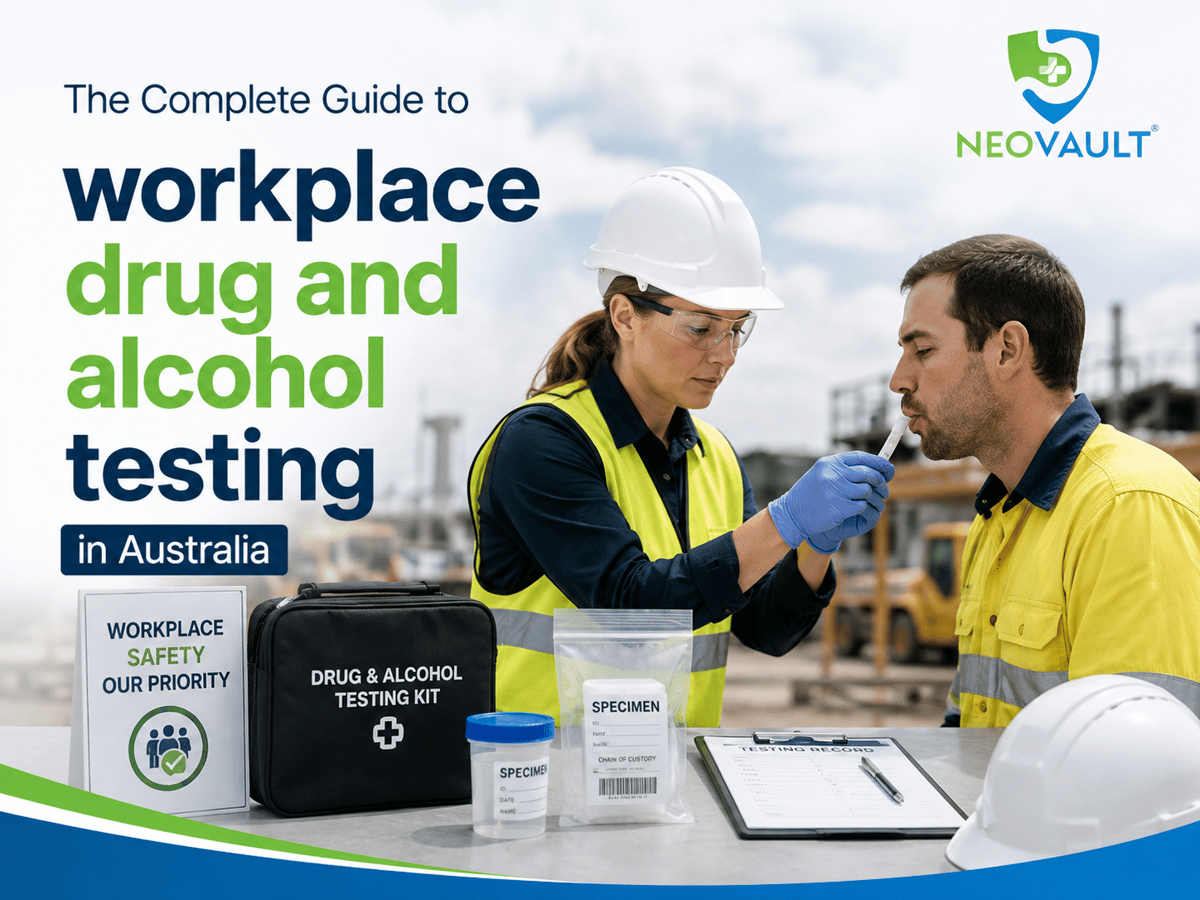
Guide to workplace drug and alcohol testing in Australia
Workplace drug and alcohol testing is a systematic process used by employers to detect the presence of alcohol, illicit drugs, or prescription medications in employees. This practice is essential to maintain a safe working environment and comply with WHS laws, functioning as a health and safety precaution rather than a punitive tool.
For many organisations, ensuring that workers are fit for duty is not just a best practice but a legal necessity. Well-structured testing programs are designed to:
Testing is essential for complying with WHS duty of care, reducing workplace accidents, and mitigating the legal and financial risks associated with impairment on the job. A structured program protects both the workforce and the organisation from the severe consequences of safety breaches.
Under Australian law, a Person Conducting a Business or Undertaking (PCBU) holds a primary duty of care. Failing to address impairment risks can lead to serious workplace injuries, legal penalties, and significant operational disruptions. Implementing a testing program provides several key benefits:
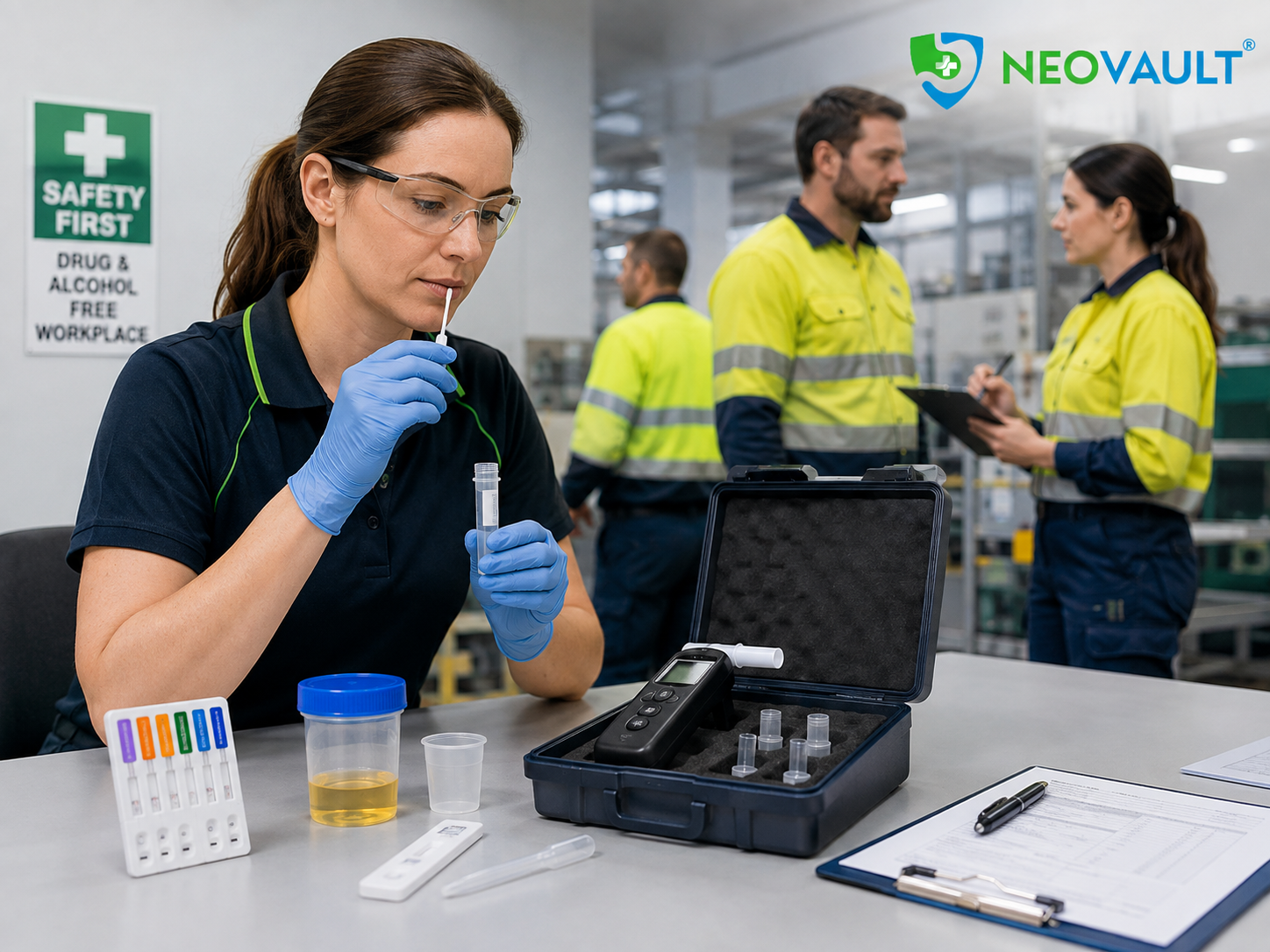
The primary testing methods in Australia include breathalyser tests for alcohol, and urine or oral fluid (saliva) analysis for drugs. Each method serves a specific purpose and is governed by strict AS/NZS standards to ensure accuracy and procedural fairness in the workplace.
Understanding the differences between these methods helps HR and Safety Managers choose the right approach for their specific operational needs.
Urine testing is conducted under the AS/NZS 4308 standard. This method is highly effective for detecting a person's historical use of substances, as drugs can remain in urine for days or even weeks after consumption. While it provides a comprehensive overview of an employee's habits, it does not necessarily indicate current impairment at the exact time of the test.
Governed by AS/NZS 4760, oral fluid or saliva testing is increasingly popular for assessing recent use. This method is excellent for detecting substances consumed within the last few hours, making it highly relevant for determining immediate impairment on the job. It is also less invasive than urine testing, which can simplify the collection process.
Breath testing is the standard method for measuring immediate alcohol concentration in a worker's system. Using a calibrated breathalyser provides instant results, allowing managers to quickly assess whether an employee is fit to commence or continue their shift.
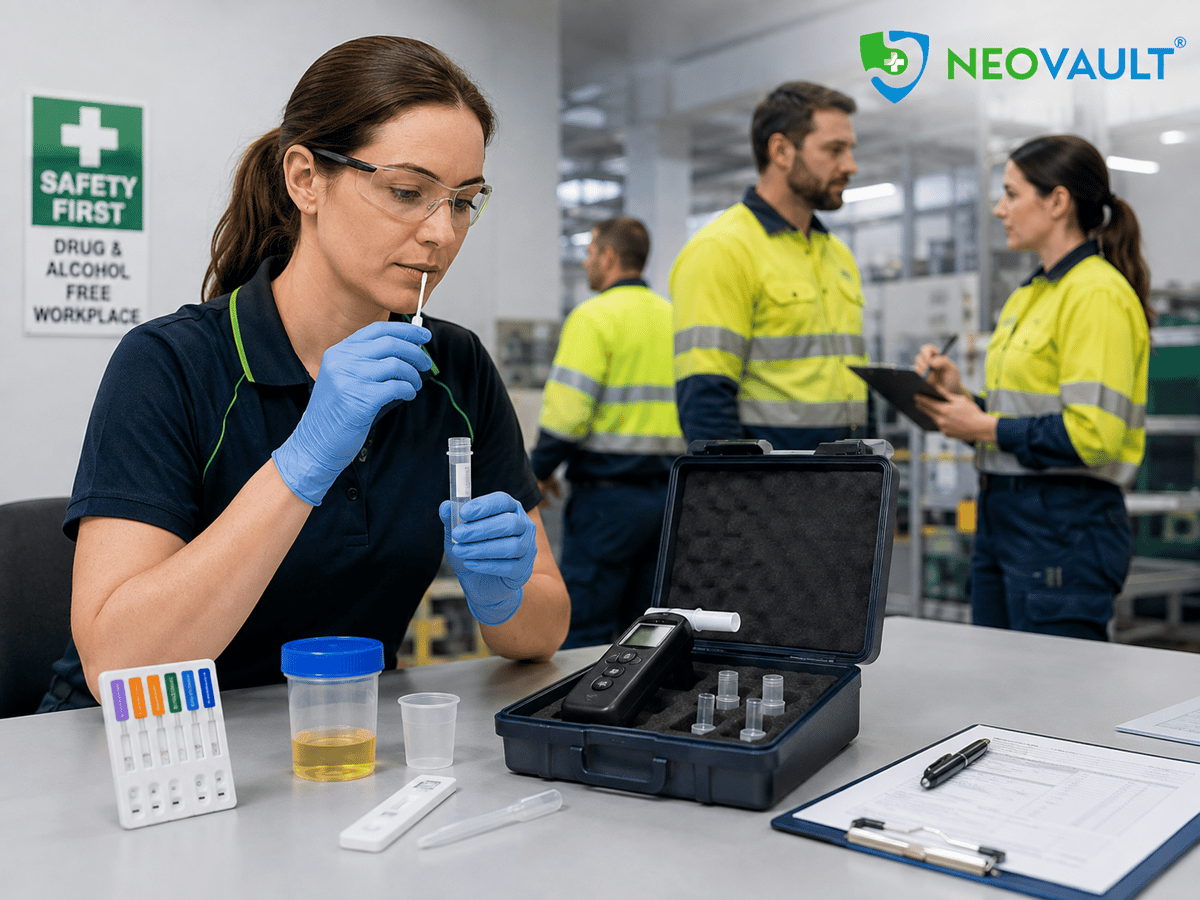
Workplace drug and alcohol testing methods in Australia
A compliant policy requires clear guidelines, employee consultation, defining when tests occur (such as random or post-incident), and establishing fair procedures for positive results. Utilising an automated drug and alcohol testing module ensures real-time compliance and reduces administrative burdens for safety teams.
Building a successful program requires careful planning and a commitment to transparency.
Before launching a testing program, it is vital to consult with employees and their representatives. A transparent policy should clearly outline what is expected, how tests will be conducted, and the consequences of a non-negative result. Providing comprehensive training ensures that everyone understands the safety objectives behind the policy.
Organisations typically utilise several testing triggers to maintain safety. To effectively manage these programs, many companies choose to digitise their records with an incident reporting system, allowing for paperless tracking and automated alerts. The two most common triggers are random testing and post-incident testing.
|
Testing Type |
Purpose |
When it is Conducted |
|
Random Testing |
Acts as a deterrent and ensures ongoing compliance without bias. |
Unannounced intervals across the workforce. |
|
Post-Incident Testing |
Determines if impairment contributed to a workplace accident or near miss. |
Immediately following a safety incident or property damage. |
Additionally, for-cause or reasonable suspicion testing is used when a supervisor observes signs of impairment, such as erratic behaviour or the smell of alcohol.
Yes, an employee can physically refuse a test. However, if the workplace drug and alcohol policy is a lawful and reasonable condition of employment, refusing the test can lead to disciplinary action, including potential termination of employment.
Not necessarily. A positive result should trigger a fair investigation process as outlined in your company policy. Many organisations focus on support and rehabilitation, offering assistance programs rather than moving straight to immediate dismissal.
Mandatory testing is heavily regulated in high-risk sectors where impairment poses severe dangers. These industries typically include aviation, rail and road transport, mining, and heavy construction, where strict regulatory standards apply.
The frequency of random testing depends on the risk profile of your industry and your organisational size. High-risk environments typically conduct tests more frequently to maintain a strong deterrent and ensure ongoing compliance with WHS regulations.
Maintaining a workplace free from the risks of drugs and alcohol is not just about legal compliance; it is about protecting the lives and wellbeing of your workforce. By understanding WHS obligations, adhering to AS/NZS standards, and implementing a clear, consultative policy, organisations can significantly reduce the risk of incidents.
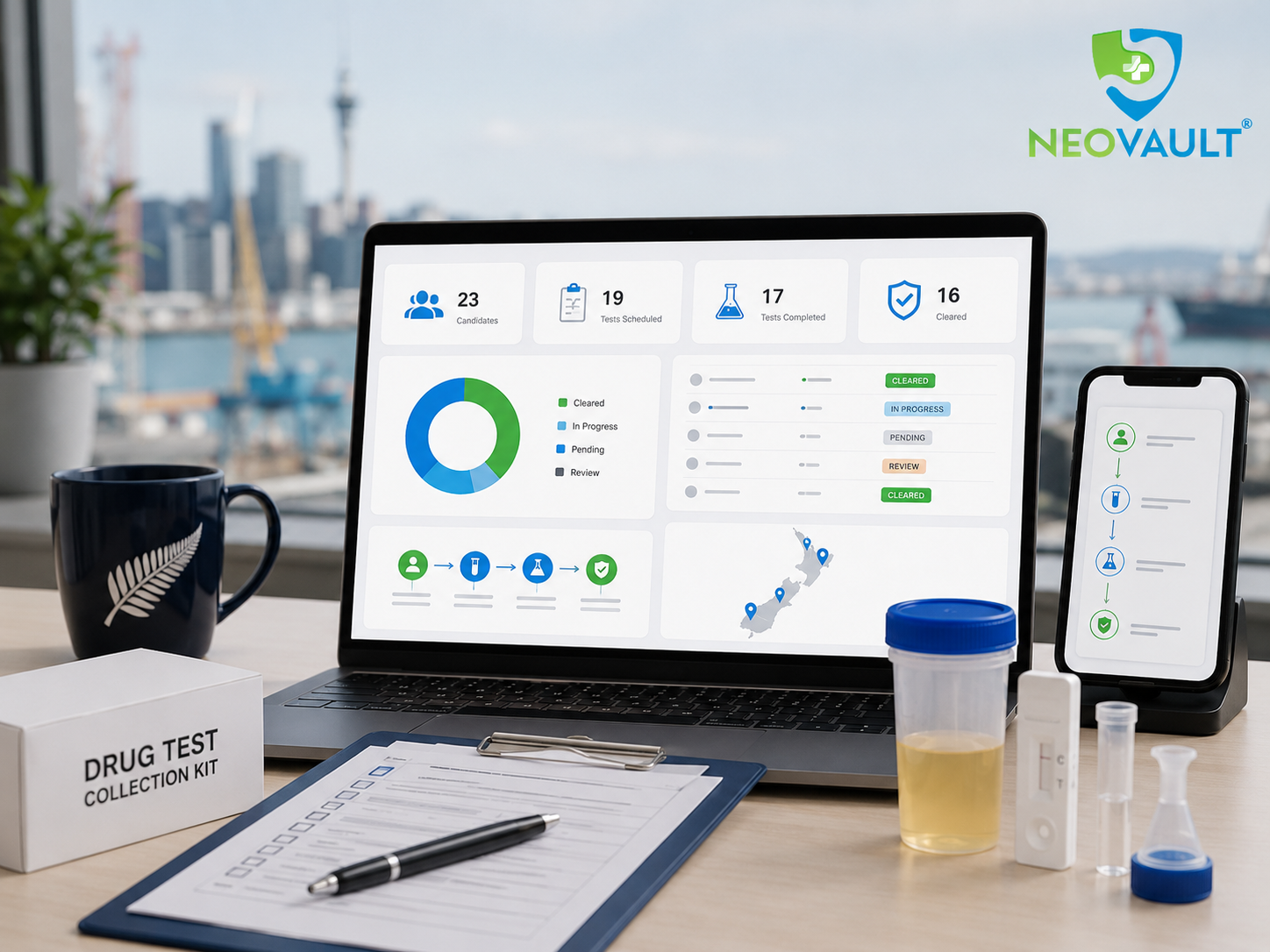
Managing these programs manually can be complex and prone to errors. NEOVAULT provides an advanced software solution designed to digitise and streamline your entire workplace drug and alcohol testing program. By centralising records, you can ensure real-time compliance and simplify the administration of random and post-incident testing. Contact us today to schedule a demo and see how we can support your workplace safety goals.